Walnut Grove Japanese-American Historic District

The National Park Service has not published a boundary polygon for this district; the map shows the listed properties inside it and the district's reference point.
Why it's listed
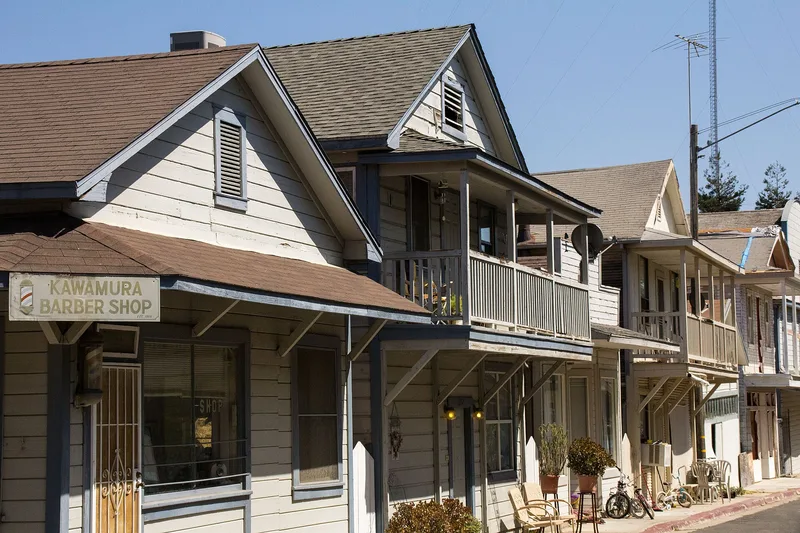
Walnut Grove's Japantown occupies about five acres on the east side of the Sacramento River and holds 33 buildings, most put up around 1916 after a fire in 1915 leveled more than 80 buildings in the town's Asian section. Japanese carpenters and builders from San Francisco, Stockton and Sacramento volunteered their labor, and families drew lots from a hat to decide where to build. The simple wood-frame structures are mostly two stories with false fronts, recessed entries, storefront windows and upper-floor porches, with shops below and family quarters above. Uses included groceries, boarding houses, bathhouses, restaurants, a language school and a Methodist church. The district served seasonal farm laborers across the Delta and became the center of Japanese American life in the region until wartime relocation in 1942. Several buildings burned during the war, leaving empty lots now used as gardens. The streetscapes have changed little, and buried deposits from the earlier Asian community date from 1880 to 1915.
Machine-generated summary. This summary was generated by a language model from the official nomination document and has not been reviewed line by line by an editor. It may contain errors. Check the source document before relying on any detail. Source: nomination document (PDF) · catalog entry. Generated October 2026 (model claude-sonnet-5-5, prompt v1.0-2026-10-29).
| Period of significance | 1915-1942 |
|---|---|
| Styles | Late 19th/Early 20th Century American Movements/Commercial Style; Craftsman (primarily vernacular false-front commercial) |
| Areas of significance | Asian, Architecture |
| Acreage | 5 |
| Boundary source | not published |
| Full listing page | Walnut Grove Japanese-American Historic District (property record) |
What listing means for this property
This is a historic district. Buildings within its boundary are either contributing (they add to the district's significance) or non-contributing. Owners of contributing income-producing buildings can claim the 20% federal rehabilitation tax credit; homeowners should look at state credits. National Register districts impose no design review by themselves; a local historic district ordinance, if one exists, does (the difference explained).
General information, not legal or tax advice. Rules change; confirm with your State Historic Preservation Office or a qualified adviser.