Van Buren Place Historic District

The National Park Service has not published a boundary polygon for this district; the map shows the listed properties inside it and the district's reference point.
Why it's listed
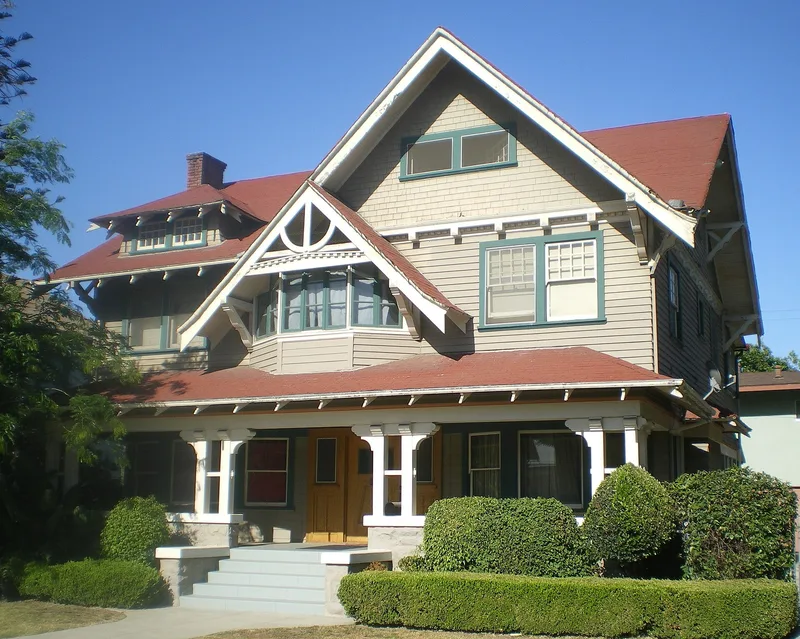
Van Buren Place Historic District is a short residential street segment in the Adams-Normandie neighborhood of south central Los Angeles, about four miles southwest of the Civic Center. It holds 14 principal houses and four auxiliary buildings, and 14 of the 18 resources contribute to its character. Most of the houses date from 1903 to 1910 and show Craftsman design with Shingle Style massing and touches of Tudor Revival, Colonial Revival and Gothic Revival detail. The Percy H. Clark Company developed much of the block, including Clark's own home at 2639 Van Buren Place, yet the designs differ noticeably from house to house. None was designed by an architect. The street matters because comparable streetscapes nearby have been lost to demolition, inappropriate alterations and intrusive construction. Residents have renovated many homes, formed a neighborhood organization, and won traffic barricades and down-zoning for the street. Most houses remain single-family residences, a few serve as congregate homes, and several have detached rear apartment units.
Machine-generated summary. This summary was generated by a language model from the official nomination document and has not been reviewed line by line by an editor. It may contain errors. Check the source document before relying on any detail. Source: nomination document (PDF) · catalog entry. Generated October 2026 (model claude-sonnet-5-5, prompt v1.0-2026-10-29).
| Styles | Shingle Style/Craftsman; Craftsman |
|---|---|
| Areas of significance | Community Planning and Development, Architecture |
| Acreage | 3 |
| Boundary source | not published |
| Full listing page | Van Buren Place Historic District (property record) |
What listing means for this property
This is a historic district. Buildings within its boundary are either contributing (they add to the district's significance) or non-contributing. Owners of contributing income-producing buildings can claim the 20% federal rehabilitation tax credit; homeowners should look at state credits. National Register districts impose no design review by themselves; a local historic district ordinance, if one exists, does (the difference explained).
General information, not legal or tax advice. Rules change; confirm with your State Historic Preservation Office or a qualified adviser.