Vallejo Old City Historic District
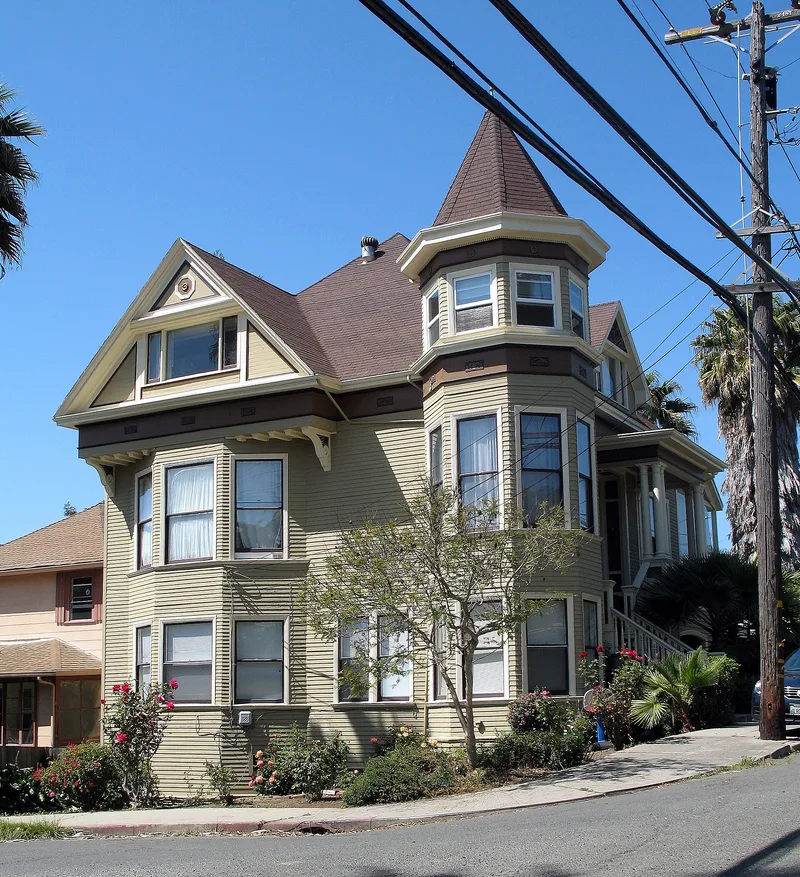

Why it's listed
This historic district in Vallejo, California, takes in a large residential area of early homes on streets including Carolina, Capitol, Virginia, Georgia, York, Sutter and Napa. The inventory describes several house types: narrow Italianate houses with flat, bracketed rooflines and carved classical trim; broader Queen Anne houses with gables, bay windows and patterned shingles; steep-pitched roof homes from the turn of the century; hip-roofed houses with dormers; California Bungalows; and stuccoed Mission or Spanish Revival homes with tile roofs. Some individual houses follow no set style and reflect their owners' wishes. The boundaries were drawn to define the core of Vallejo's Victorian area and to keep whole street frontages together, because the city planned to zone the district as historic. The block of Capitol Street ending in a flight of steep stairs is included as a natural entrance to the area. Photographs show the earliest and best examples, while the entire neighborhood is covered by the listing.
Machine-generated summary. This summary was generated by a language model from the official nomination document and has not been reviewed line by line by an editor. It may contain errors. Check the source document before relying on any detail. Source: nomination document (PDF) · catalog entry. Generated October 2026 (model claude-sonnet-5-5, prompt v1.0-2026-10-29).
| Styles | Italianate, Queen Anne, steep-pitched roof, hip roof with dormer, California Bungalow, and Mission/Spanish Revival houses |
|---|---|
| Areas of significance | Architecture |
| Acreage | 80 |
| Boundary source | NPS cultural-resource GIS polygon |
| Full listing page | Vallejo Old City Historic District (property record) |
What listing means for this property
This is a historic district. Buildings within its boundary are either contributing (they add to the district's significance) or non-contributing. Owners of contributing income-producing buildings can claim the 20% federal rehabilitation tax credit; homeowners should look at state credits. National Register districts impose no design review by themselves; a local historic district ordinance, if one exists, does (the difference explained).
General information, not legal or tax advice. Rules change; confirm with your State Historic Preservation Office or a qualified adviser.