Sugar Pine Point State Park

Why it's listed
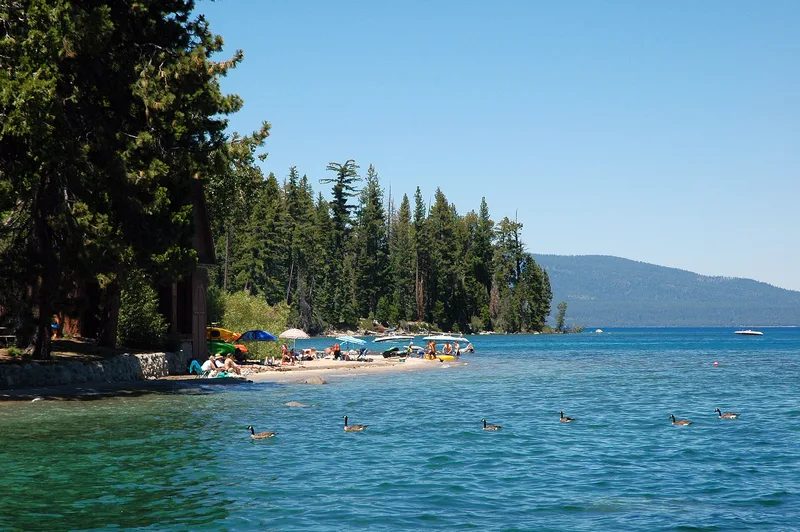
Sugar Pine Point State Park, on Lake Tahoe's western shore near Homewood, preserves layers of local history within a district of about 10.5 acres. The oldest standing building is a roughly 15-foot-square cabin of hand-hewn pine logs, built in 1872 by William Phipps, the first permanent settler recorded on the western shore. An offshore Native American bedrock mortar site and old roads also survive. Later, banker Isaias W. Hellman acquired the land and had a three-story Victorian frame and stone mansion completed around 1903-04, along with a tank house and coach barn. By 1913 the estate was regarded as the finest private estate in the High Sierra. The Ehrman family, Hellman's descendants, used it as a summer residence until the State of California acquired it in 1965. The property was listed for its pioneer, Native American and estate-era associations and its architecture, and it now serves as a park and museum.
Machine-generated summary. This summary was generated by a language model from the official nomination document and has not been reviewed line by line by an editor. It may contain errors. Check the source document before relying on any detail. Source: nomination document (PDF) · catalog entry. Generated October 2026 (model claude-sonnet-5-5, prompt v1.0-2026-10-29).
| Styles | Victorian frame and stone (Main House); rustic pioneer log construction (Phipps Cabin) |
|---|---|
| Areas of significance | Prehistoric, Architecture |
| Acreage | 10.5 |
| Boundary source | NPS cultural-resource GIS polygon |
| Full listing page | Sugar Pine Point State Park (property record) |
What listing means for this property
This is a historic district. Buildings within its boundary are either contributing (they add to the district's significance) or non-contributing. Owners of contributing income-producing buildings can claim the 20% federal rehabilitation tax credit; homeowners should look at state credits. National Register districts impose no design review by themselves; a local historic district ordinance, if one exists, does (the difference explained).
General information, not legal or tax advice. Rules change; confirm with your State Historic Preservation Office or a qualified adviser.