State Asylum for the Deaf,Dumb and Blind

Why it's listed
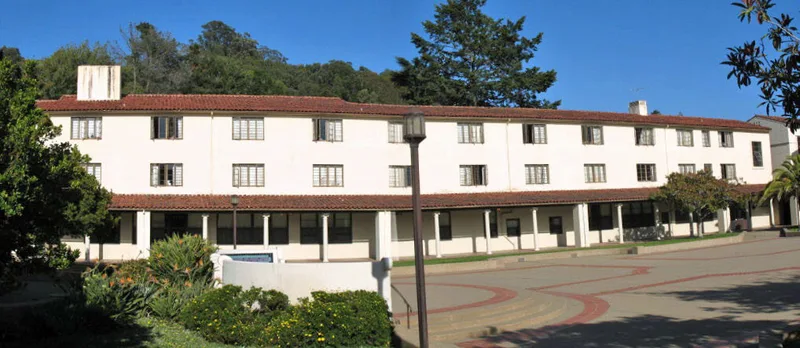
The California Schools for the Deaf and the Blind occupy a 50-acre campus at the foot of the Berkeley hills, where the institution has operated since 1867. The site holds classrooms, dormitories, auditoria, dining halls and gymnasia, mostly built between 1914 and the 1950s from reinforced concrete. Buildings share red tile roofs, light walls and Hispanic details such as arches, miradors, quatrefoil windows, balconies and loggias. Most were designed by the Office of the State Architect, with Alfred Eichler, R.D. Murray and Charles F.B. Roeth among the named designers. Buildings of the Deaf school are arranged around courtyards linked by arcades, while the Blind school sits along Derby Street. Interior features include relief panels by sculptor Sargent Claude Johnson, commissioned by the Federal Arts Project in 1937. The campus was listed because its consistent design vocabulary and landscape planning unite buildings from several eras, and because it illustrates the state's long-running public school for deaf and blind students, founded in San Francisco in 1860.
Machine-generated summary. This summary was generated by a language model from the official nomination document and has not been reviewed line by line by an editor. It may contain errors. Check the source document before relying on any detail. Source: nomination document (PDF) · catalog entry. Generated October 2026 (model claude-sonnet-5-5, prompt v1.0-2026-10-29).
| Styles | Spanish Colonial Revival / Hispanic details, with some Moderne motifs |
|---|---|
| Areas of significance | Landscape Architecture, Education, Architecture, Social History |
| Acreage | 50 |
| Boundary source | NPS cultural-resource GIS polygon |
| Full listing page | State Asylum for the Deaf,Dumb and Blind (property record) |
What listing means for this property
This is a historic district. Buildings within its boundary are either contributing (they add to the district's significance) or non-contributing. Owners of contributing income-producing buildings can claim the 20% federal rehabilitation tax credit; homeowners should look at state credits. National Register districts impose no design review by themselves; a local historic district ordinance, if one exists, does (the difference explained).
General information, not legal or tax advice. Rules change; confirm with your State Historic Preservation Office or a qualified adviser.