St. Helena Historic Commercial District

The National Park Service has not published a boundary polygon for this district; the map shows the listed properties inside it and the district's reference point.
Why it's listed
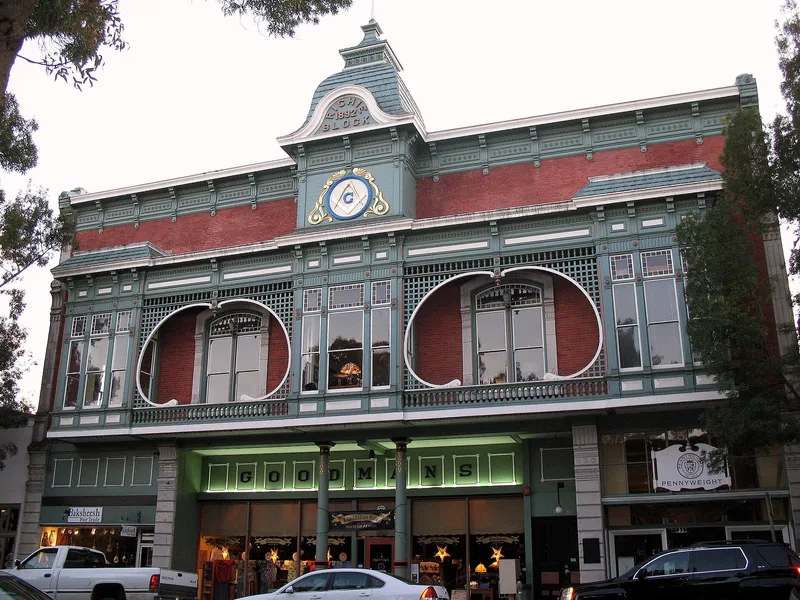
St. Helena's downtown commercial district follows Main Street and nearby streets between Adams and Spring Streets. It includes 48 elements, nearly all buildings, and 35 of them contribute to its historic character. Fifteen buildings use cut native trachytic tuff, giving the district its most distinctive trait. Other walls are brick, stucco, terra cotta and metal. Most buildings have one story, none exceeds two, and storefronts typically have recessed entrances and display windows. Notable examples include the Galleron Building, the Hunt Building, the Richie Block, the Italianate Oddfellows' Hall designed by San Francisco architect A. Schopfer, and a small prefabricated Streamline Moderne gas station. The William Tell Hotel and Saloon was already listed individually. Between 1870 and 1947 flimsy early structures were replaced by larger, sturdier ones, and by 1947 about two-thirds of the 1870 buildings had been replaced. Later changes include modernized storefronts, awnings and tourist-oriented signs, yet the contiguous buildings and retail use preserve a traditional downtown feel.
Machine-generated summary. This summary was generated by a language model from the official nomination document and has not been reviewed line by line by an editor. It may contain errors. Check the source document before relying on any detail. Source: nomination document (PDF) · catalog entry. Generated October 2026 (model claude-sonnet-5-5, prompt v1.0-2026-10-29).
| Period of significance | 1870-1947 |
|---|---|
| Styles | Late Victorian: Italianate; No Style |
| Areas of significance | Architecture |
| Acreage | 8.3 |
| Boundary source | not published |
| Full listing page | St. Helena Historic Commercial District (property record) |
What listing means for this property
This is a historic district. Buildings within its boundary are either contributing (they add to the district's significance) or non-contributing. Owners of contributing income-producing buildings can claim the 20% federal rehabilitation tax credit; homeowners should look at state credits. National Register districts impose no design review by themselves; a local historic district ordinance, if one exists, does (the difference explained).
General information, not legal or tax advice. Rules change; confirm with your State Historic Preservation Office or a qualified adviser.