Southern Pacific Depot

Why it's listed
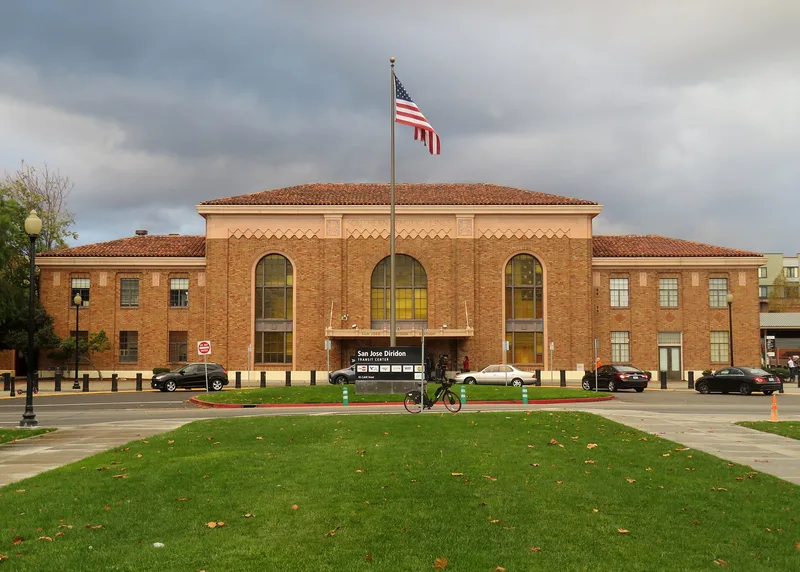
Southern Pacific's Cahill Street station in San Jose is a railroad complex built around a 1935 combination passenger and freight depot. The brick building has a three-story center flanked by two-story wings, a terra cotta tile roof, and three tall arches on its main facade. Inside, the waiting room has terrazzo floors, a coffered ceiling and a mural by John MacQuarrie depicting the colonization of the Santa Clara Valley. Designed by Southern Pacific architect John H. Christie, it replaced the 1872 Market Street station and ended a 30-year effort to move the main line away from downtown traffic. The district also includes the 1933 underpass, a water tower, butterfly passenger sheds, tracks and three small utilitarian sheds. Its listing rests on architecture: it is a late example of Italian Renaissance Revival design, mixed with Streamline Moderne touches, and one of only four such transportation buildings in California. It remains largely unaltered and still serves travelers.
Machine-generated summary. This summary was generated by a language model from the official nomination document and has not been reviewed line by line by an editor. It may contain errors. Check the source document before relying on any detail. Source: nomination document (PDF) · catalog entry. Generated October 2026 (model claude-sonnet-5-5, prompt v1.0-2026-10-29).
| Period of significance | 1932-1935 |
|---|---|
| Styles | Italian Renaissance Revival |
| Areas of significance | Architecture |
| Acreage | 12.5 |
| Boundary source | NPS cultural-resource GIS polygon |
| Full listing page | Southern Pacific Depot (property record) |
What listing means for this property
This is a historic district. Buildings within its boundary are either contributing (they add to the district's significance) or non-contributing. Owners of contributing income-producing buildings can claim the 20% federal rehabilitation tax credit; homeowners should look at state credits. National Register districts impose no design review by themselves; a local historic district ordinance, if one exists, does (the difference explained).
General information, not legal or tax advice. Rules change; confirm with your State Historic Preservation Office or a qualified adviser.