South Pasadena Historic District

Why it's listed
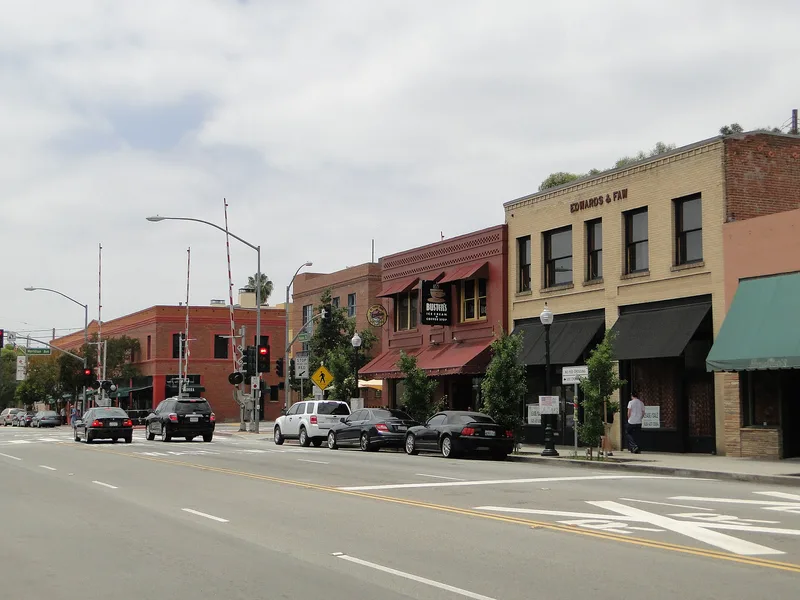
South Pasadena's original business district sits around Mission Street, El Centro Street and Meridian Avenue. Commercial activity began after the Los Angeles and San Gabriel Valley Railway started service in 1885, and a depot, hotel, general store and opera house followed. After 1900, two-story brick blocks such as the Alexander, Graham, Taylor, Edwards and Faw, and Shapiro buildings lined Mission Street, with shops below and apartments or meeting halls above. The Mission Hotel (1923) and Ashton Block (1924) were the last additions. Nearby are the 1903 South Pasadena Bank Building, the 1907 Carnegie library by Marsh & Russell, the 1928 El Centro School, a 1906 watering trough and wayside station, and the c. 1887 Meridian Iron Works, the former general store. Business activity shifted toward Fair Oaks Avenue by 1925, leaving this compact area with its small-town character. Every significant building has been altered to some degree, though mostly sympathetically. The district was listed for its role in the city's commercial, educational and civic growth.
Machine-generated summary. This summary was generated by a language model from the official nomination document and has not been reviewed line by line by an editor. It may contain errors. Check the source document before relying on any detail. Source: nomination document (PDF) · catalog entry. Generated October 2026 (model claude-sonnet-5-5, prompt v1.0-2026-10-29).
| Period of significance | 1885-1924 (form gives specific dates as 1885- and checks the 1800s and 1900- periods; commercial network finished by 1925) |
|---|---|
| Styles | Commercial, Neo-Classical, Mediterranean Revival, American Craftsman, Victorian false front, and western storefront styles |
| Areas of significance | Commerce |
| Acreage | 11 |
| Boundary source | NPS cultural-resource GIS polygon |
| Full listing page | South Pasadena Historic District (property record) |
What listing means for this property
This is a historic district. Buildings within its boundary are either contributing (they add to the district's significance) or non-contributing. Owners of contributing income-producing buildings can claim the 20% federal rehabilitation tax credit; homeowners should look at state credits. National Register districts impose no design review by themselves; a local historic district ordinance, if one exists, does (the difference explained).
General information, not legal or tax advice. Rules change; confirm with your State Historic Preservation Office or a qualified adviser.