Six Sisters-Lawn Way Historic District

The National Park Service has not published a boundary polygon for this district; the map shows the listed properties inside it and the district's reference point.
Why it's listed
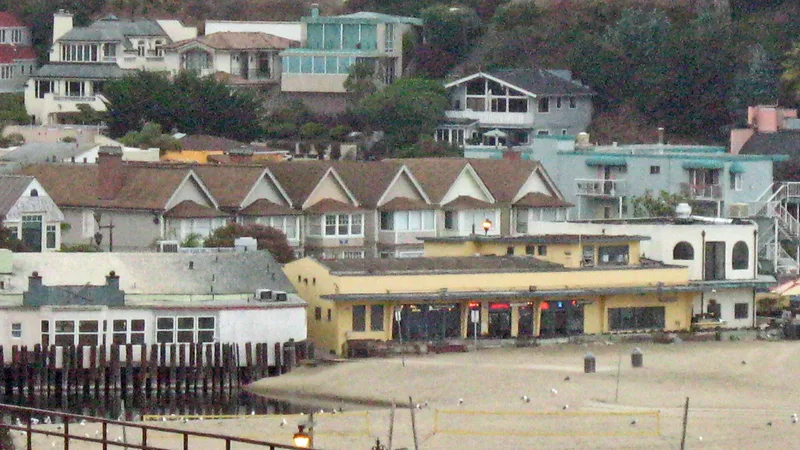
Six Sisters-Lawn Way is a small group of buildings in the center of Capitola Village, arranged around Lawn Way, a cross-axial pedestrian green. Two building types define it: six near-identical two-story Victorian apartments on the Esplanade, known as the Six Sisters, and one- and two-story gable-front cottages, mostly built between 1910 and 1914, that line the walkway. The buildings are mainly wood frame with weatherboard and shingle siding, and their entrances sit flush or recessed along the walkway. The area grew out of Camp Capitola, the seaside resort founded by Frederick A. Hihn, and the Six Sisters were built after the grand Hotel Capitola opened in 1895. The district is valued as the city's most cohesive reminder of its peak years as a resort. It holds the earliest two-story cottages in Capitola and its only formal village green. Some buildings have been converted to shops, and a few are later replacements or additions.
Machine-generated summary. This summary was generated by a language model from the official nomination document and has not been reviewed line by line by an editor. It may contain errors. Check the source document before relying on any detail. Source: nomination document (PDF) · catalog entry. Generated October 2026 (model claude-sonnet-5-5, prompt v1.0-2026-10-29).
| Period of significance | c. 1898-c. 1914 |
|---|---|
| Styles | Victorian (Six Sisters) and early twentieth-century beach cottages with Craftsman influence |
| Areas of significance | Entertainment/Recreation, Architecture |
| Acreage | 0.9 |
| Boundary source | not published |
| Full listing page | Six Sisters-Lawn Way Historic District (property record) |
What listing means for this property
This is a historic district. Buildings within its boundary are either contributing (they add to the district's significance) or non-contributing. Owners of contributing income-producing buildings can claim the 20% federal rehabilitation tax credit; homeowners should look at state credits. National Register districts impose no design review by themselves; a local historic district ordinance, if one exists, does (the difference explained).
General information, not legal or tax advice. Rules change; confirm with your State Historic Preservation Office or a qualified adviser.