Shasta State Historic Park

Why it's listed
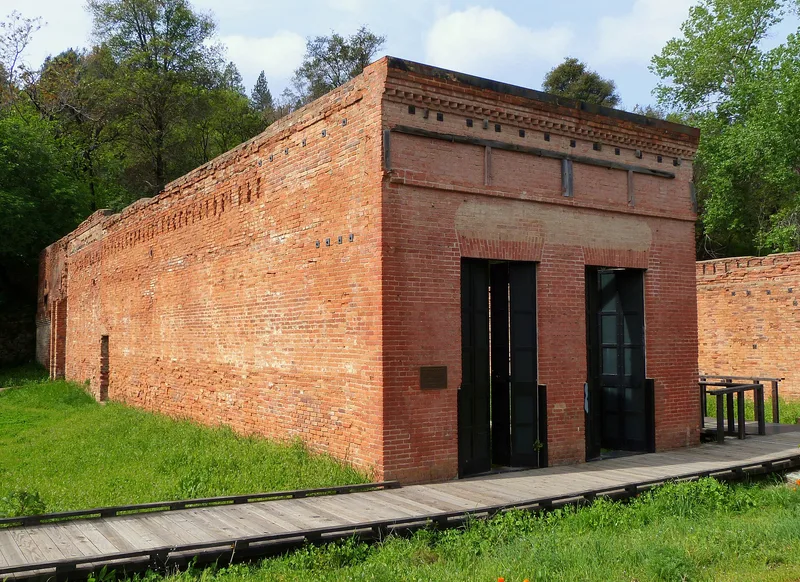
Shasta State Historic Park preserves the core of an old Gold Rush town along Highway 299, about six miles west of Redding, California. Founded in 1849 and named Shasta in 1850, the town was the second seat of Shasta County from 1851 to 1888 and the leading town of Northern California during the 1850s. The road ended here, and the Oregon Pack Trail began, until 1861. Fires and time have reduced it to a row of ruined brick buildings and a few restored structures, including the Courthouse, Litsch Store and Masonic Hall, plus the ruins of Whaley's Brewery. The brick buildings used iron plate and sheet iron to make business houses fireproof, with Classical Greco-Roman details, a response to repeated fires in Gold Rush towns. Nearby hillside cemeteries hold the graves of many early residents. The district reflects the mining and freighting trade that supported the Trinity Alps goldfields.
Machine-generated summary. This summary was generated by a language model from the official nomination document and has not been reviewed line by line by an editor. It may contain errors. Check the source document before relying on any detail. Source: nomination document (PDF) · catalog entry. Generated October 2026 (model claude-sonnet-5-5, prompt v1.0-2026-10-29).
| Period of significance | 19th Century |
|---|---|
| Styles | Fire-resistant Gold Rush commercial architecture in brick, heavy iron plate and sheet iron, with adapted Classical Greco-Roman elements |
| Areas of significance | Industry, Politics/Government, Architecture |
| Acreage | 15 |
| Boundary source | NPS cultural-resource GIS polygon |
| Full listing page | Shasta State Historic Park (property record) |
What listing means for this property
This is a historic district. Buildings within its boundary are either contributing (they add to the district's significance) or non-contributing. Owners of contributing income-producing buildings can claim the 20% federal rehabilitation tax credit; homeowners should look at state credits. National Register districts impose no design review by themselves; a local historic district ordinance, if one exists, does (the difference explained).
General information, not legal or tax advice. Rules change; confirm with your State Historic Preservation Office or a qualified adviser.