Shafter Research Station

Why it's listed
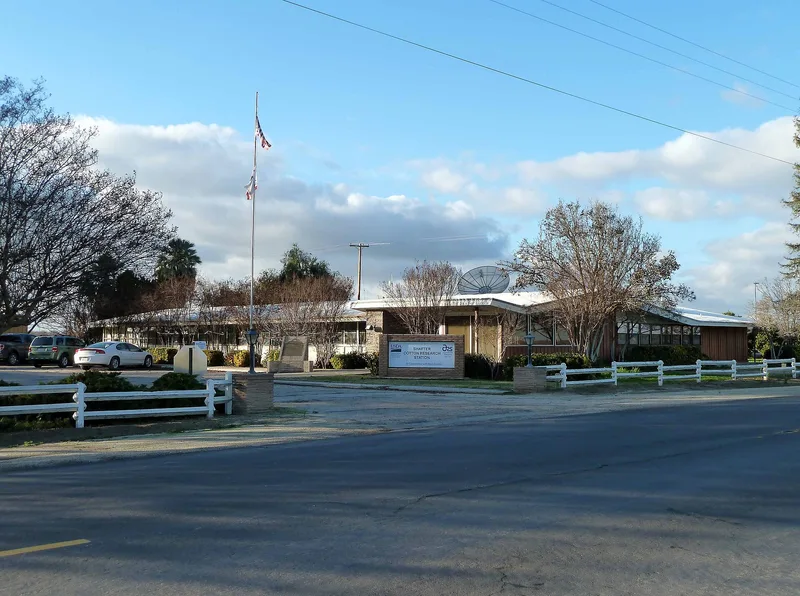
Shafter Research Station is a cotton research farm near Shafter in Kern County, California. The nominated district covers about 17.5 acres of the 77-acre site. It contains the earliest buildings, including an adobe administration and fiber laboratory and a Craftsman-style superintendent's house, both built in 1922. Also included are an adobe seed storage laboratory, a 1930s greenhouse, a 1937 cotton gin building, later sheds and shops, and about eight acres of experimental cotton fields. The station began after a federal agronomist's cotton variety tests across the Southwest pointed to the San Joaquin Valley. Kern County land was leased and later bought by the county for the U.S. Department of Agriculture. Breeding and testing there led to the "One Variety" approach built around Acala cotton. California's One Variety Cotton Act followed in 1925. The station is recognized for this role in the state's cotton industry, and its seed and production research has drawn visitors and students from other cotton-growing countries. The period of significance runs from 1922 to 1947.
Machine-generated summary. This summary was generated by a language model from the official nomination document and has not been reviewed line by line by an editor. It may contain errors. Check the source document before relying on any detail. Source: nomination document (PDF) · catalog entry. Generated October 2026 (model claude-sonnet-5-5, prompt v1.0-2026-10-29).
| Period of significance | 1922-1947 |
|---|---|
| Styles | Mission/Spanish Colonial Revival; Bungalow/Craftsman; No Style |
| Areas of significance | Agriculture, Science |
| Acreage | 17.5 |
| Boundary source | NPS cultural-resource GIS polygon |
| Full listing page | Shafter Research Station (property record) |
What listing means for this property
This is a historic district. Buildings within its boundary are either contributing (they add to the district's significance) or non-contributing. Owners of contributing income-producing buildings can claim the 20% federal rehabilitation tax credit; homeowners should look at state credits. National Register districts impose no design review by themselves; a local historic district ordinance, if one exists, does (the difference explained).
General information, not legal or tax advice. Rules change; confirm with your State Historic Preservation Office or a qualified adviser.