Second and Howard Streets District

Why it's listed
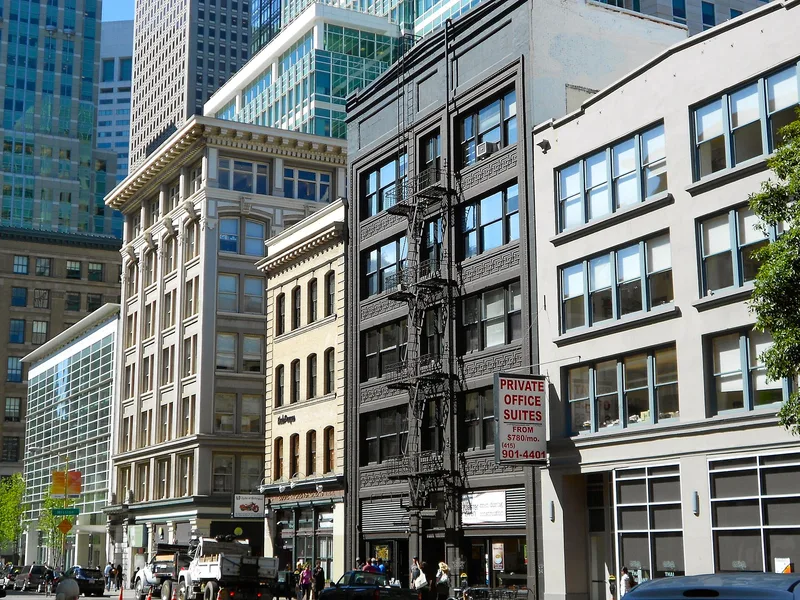
This group of 22 properties lies in San Francisco's South of Market area, along Second Street, part of Howard Street, and the alleys of Natoma and Minna out to New Montgomery Street. Nineteen buildings contribute to the district. All were built between 1906 and 1912, during the rebuilding that followed the 1906 earthquake and fire. They are three to seven stories tall and built of masonry, about half in brick, two in terra cotta and the rest in stucco. Their Commercial Style design uses restrained Renaissance-Baroque ornament, mostly at the cornices. The area served the construction industry, and a 1910 directory lists plumbing suppliers, electrical firms, a terra cotta works, engineers, printers and chemists. Ground floors have often been altered for shops, while upper floors were typically lofts. The district was recognized for its architecture and for the consistent scale and character that survive, with works by architects such as the Reid Brothers and John Cotter Pelton. Two altered buildings and a vacant lot do not contribute.
Machine-generated summary. This summary was generated by a language model from the official nomination document and has not been reviewed line by line by an editor. It may contain errors. Check the source document before relying on any detail. Source: nomination document (PDF) · catalog entry. Generated October 2026 (model claude-sonnet-5-5, prompt v1.0-2026-10-29).
| Period of significance | 1906-1912 |
|---|---|
| Styles | Commercial Style with limited Renaissance-Baroque ornament |
| Areas of significance | Architecture |
| Acreage | 31 |
| Boundary source | NPS cultural-resource GIS polygon |
| Full listing page | Second and Howard Streets District (property record) |
What listing means for this property
This is a historic district. Buildings within its boundary are either contributing (they add to the district's significance) or non-contributing. Owners of contributing income-producing buildings can claim the 20% federal rehabilitation tax credit; homeowners should look at state credits. National Register districts impose no design review by themselves; a local historic district ordinance, if one exists, does (the difference explained).
General information, not legal or tax advice. Rules change; confirm with your State Historic Preservation Office or a qualified adviser.