Scripps College for Women

Why it's listed
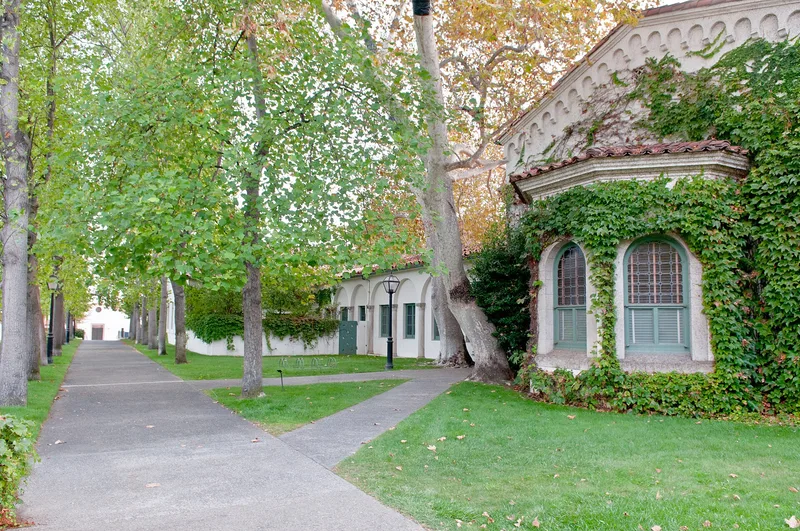
Scripps College in Claremont, California, is a walled women's college campus planned as a single design in 1926. Gordon B. Kaufmann designed eight of its ten major buildings, including the Toll, Grace Scripps, Ellen Browning and Susan Miller Dorsey residence halls and the Denison Library. Edward Huntsman-Trout laid out the formal gardens, courtyards and lawns, drawing on Italian Renaissance garden models. The buildings share creamy white stucco, red tile roofs and a residential scale, none rising above three stories. The nomination presents the campus as unusually unified for a college, with the Mediterranean style chosen deliberately to suit the study of arts and humanities. It notes that the original landscaping and buildings are largely intact, the main change being the 1970 Humanities Building on the former olive grove. Buildings continue in their original uses, and the campus contrasts with the housing tracts that have grown up around it. Kaufmann regarded it as his finest work.
Machine-generated summary. This summary was generated by a language model from the official nomination document and has not been reviewed line by line by an editor. It may contain errors. Check the source document before relying on any detail. Source: nomination document (PDF) · catalog entry. Generated October 2026 (model claude-sonnet-5-5, prompt v1.0-2026-10-29).
| Period of significance | 1927-1970 |
|---|---|
| Styles | Mediterranean / Spanish Gothic; Spanish Colonial Revival; President's House is Period Revival |
| Areas of significance | Landscape Architecture, Architecture |
| Acreage | 17.5 |
| Boundary source | NPS cultural-resource GIS polygon |
| Full listing page | Scripps College for Women (property record) |
What listing means for this property
This is a historic district. Buildings within its boundary are either contributing (they add to the district's significance) or non-contributing. Owners of contributing income-producing buildings can claim the 20% federal rehabilitation tax credit; homeowners should look at state credits. National Register districts impose no design review by themselves; a local historic district ordinance, if one exists, does (the difference explained).
General information, not legal or tax advice. Rules change; confirm with your State Historic Preservation Office or a qualified adviser.