San Luis Obispo Light Station

Why it's listed
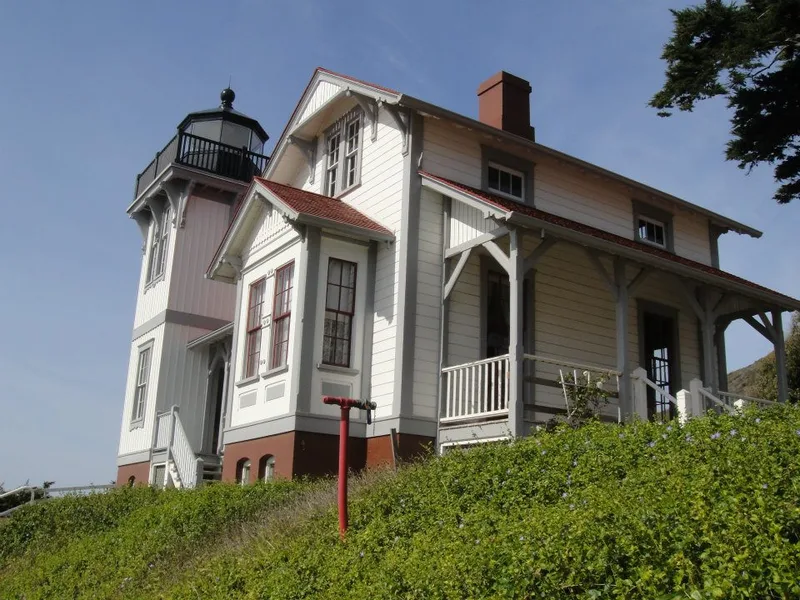
Set on a hillside ridge near the entrance to San Luis Obispo Harbor, this light station was completed on June 30, 1890, to serve the busy port then called Port Harford. No lighthouse stood on the south-central coast across the 94 miles between Point Arguello and Piedras Blancas, and the 1888 sinking of the steamer Queen of the Pacific strengthened the case for a light. The complex includes a 40-foot square tower attached to a two-story wood-frame keeper's residence, a 1892 fog-signal building, a brick oil house, a privy, cisterns and a catch basin. Two 1961 duplexes and a heavily remodeled carpenter's shop do not contribute. Its Victorian Stick-style design is notable: of seven similar wood-frame lighthouses built in California between 1874 and 1892, only three survive, and this is the only one in the pure, simplified Stick style. Matching brackets on the fog-signal building and oil house unify the group visually.
Machine-generated summary. This summary was generated by a language model from the official nomination document and has not been reviewed line by line by an editor. It may contain errors. Check the source document before relying on any detail. Source: nomination document (PDF) · catalog entry. Generated October 2026 (model claude-sonnet-5-5, prompt v1.0-2026-10-29).
| Period of significance | 1890-1940 (amended by the Keeper from 1890-1949) |
|---|---|
| Styles | Stick/Eastlake; Other: Lighthouse (wood-frame Victorian "stick" style) |
| Areas of significance | Commerce, Transportation, Architecture, Maritime History |
| Acreage | 30 |
| Boundary source | NPS cultural-resource GIS polygon |
| Full listing page | San Luis Obispo Light Station (property record) |
What listing means for this property
This is a historic district. Buildings within its boundary are either contributing (they add to the district's significance) or non-contributing. Owners of contributing income-producing buildings can claim the 20% federal rehabilitation tax credit; homeowners should look at state credits. National Register districts impose no design review by themselves; a local historic district ordinance, if one exists, does (the difference explained).
General information, not legal or tax advice. Rules change; confirm with your State Historic Preservation Office or a qualified adviser.