San Francisco Port of Embarkation, US Army

Why it's listed
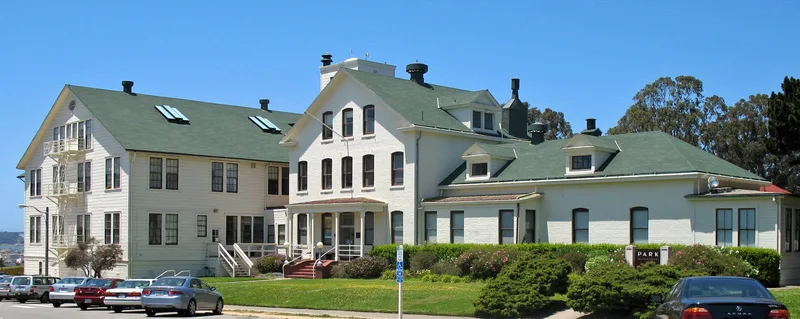
Fort Mason's lower port area and headquarters building in San Francisco formed the core of the U.S. Army's Pacific shipping operation. The headquarters began in 1902 as a small brick post hospital and was later enlarged with additions to hold depot and port offices. Between 1909 and 1912 the army built a seawall, piers, wharves and storehouses below the fort, designed by Rankin, Kellogg, and Crane in Spanish Mission Revival style, with buff walls and red tile roofs. The first transport, Sherman, docked in January 1912. Public Works Administration funds paid for pier extensions, sheds, repair shops and other improvements in the 1930s. During World War II the port oversaw operations at other Bay Area installations and sent about 1,745,000 personnel overseas, along with more than 25 million measurement tons of cargo. It served as the primary port for the Central, South and Southwest Pacific. Today the buildings are part of the Golden Gate National Recreation Area and house community activities.
Machine-generated summary. This summary was generated by a language model from the official nomination document and has not been reviewed line by line by an editor. It may contain errors. Check the source document before relying on any detail. Source: nomination document (PDF) · catalog entry. Generated October 2026 (model claude-sonnet-5-5, prompt v1.0-2026-10-29).
| Period of significance | 1912-1945 |
|---|---|
| Styles | Spanish Mission Revival (port area buildings) |
| Areas of significance | Military |
| Acreage | 21 |
| Boundary source | NPS cultural-resource GIS polygon |
| Full listing page | San Francisco Port of Embarkation, US Army (property record) |
What listing means for this property
This is a historic district. Buildings within its boundary are either contributing (they add to the district's significance) or non-contributing. Owners of contributing income-producing buildings can claim the 20% federal rehabilitation tax credit; homeowners should look at state credits. National Register districts impose no design review by themselves; a local historic district ordinance, if one exists, does (the difference explained).
General information, not legal or tax advice. Rules change; confirm with your State Historic Preservation Office or a qualified adviser.