San Francisco Civic Center Historic District

Why it's listed
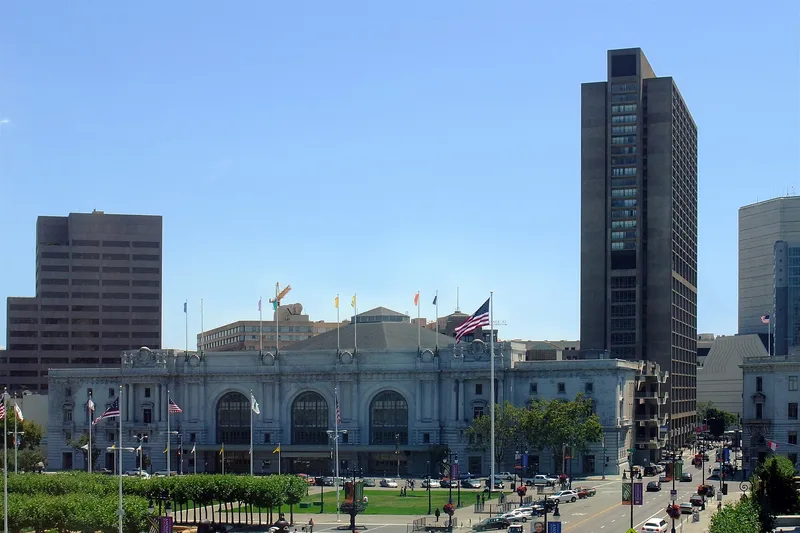
San Francisco's Civic Center is a group of monumental public buildings gathered around Civic Center Plaza, with further buildings extending the main axis to the east and west. It covers all or part of 12 city blocks. City Hall, built in 1913-16, anchors the district with a dome rising more than 300 feet, higher than the U.S. Capitol, on a granite-clad steel frame. Facing it across Van Ness Avenue, the 1932 War Memorial complex pairs the Opera House and the Veterans Building on either side of a landscaped court. Other major buildings include the 1915 Exposition Auditorium, the 1916 Public Library and the Federal Building. Most are designed in Beaux Arts or Renaissance-inspired classical styles. Nine buildings are described as contributing to the district's national importance. The Herbst Auditorium in the Veterans Building is where the United Nations Charter was signed on June 26, 1945. The buildings continue to serve government, cultural, museum and convention uses.
Machine-generated summary. This summary was generated by a language model from the official nomination document and has not been reviewed line by line by an editor. It may contain errors. Check the source document before relying on any detail. Source: nomination document (PDF) · catalog entry. Generated October 2026 (model claude-sonnet-5-5, prompt v1.0-2026-10-29).
| Styles | Beaux Arts and Classical, with City Hall in late French Renaissance or Baroque style |
|---|---|
| Areas of significance | Community Planning and Development, Landscape Architecture, Art, Entertainment/Recreation, Politics/Government, Architecture, Social History |
| Acreage | 45.6 |
| Boundary source | NPS cultural-resource GIS polygon |
| Full listing page | San Francisco Civic Center Historic District (property record) |
What listing means for this property
This is a historic district. Buildings within its boundary are either contributing (they add to the district's significance) or non-contributing. Owners of contributing income-producing buildings can claim the 20% federal rehabilitation tax credit; homeowners should look at state credits. National Register districts impose no design review by themselves; a local historic district ordinance, if one exists, does (the difference explained).
General information, not legal or tax advice. Rules change; confirm with your State Historic Preservation Office or a qualified adviser.