Saint Vincent's Hill Historic District

Why it's listed
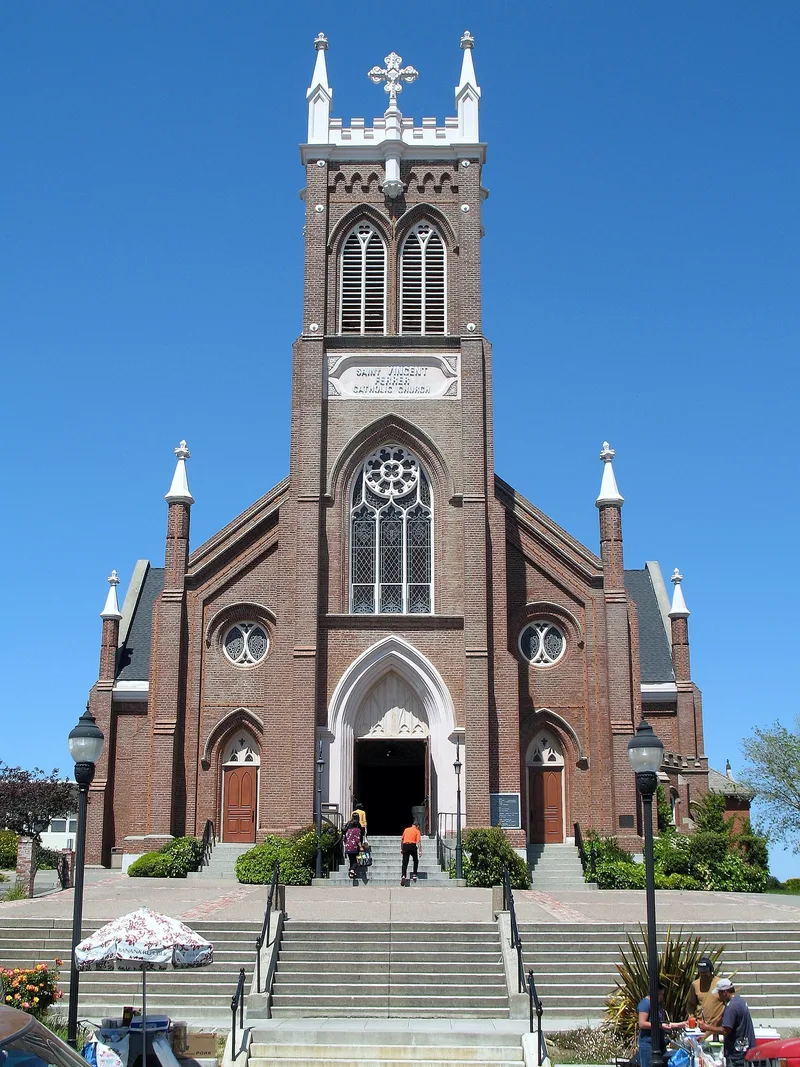
Saint Vincent's Hill is a hillside neighborhood of about 540 parcels just north of downtown Vallejo, California, laid out on a regular grid of 38 blocks that rise from the Mare Island Channel to a crest of 120 feet. It grew around Saint Vincent Ferrer Catholic Church, built in 1868 in the Gothic Revival style on land donated by General John Frisbie, and developed in waves through the end of World War II as Mare Island Naval Shipyard drew workers. Of 691 primary buildings, 542 contribute to its character. Most are modest one-story houses in Stick/Eastlake, Italianate, Queen Anne, Colonial Revival, Craftsman and Prairie styles, along with plain vernacular types such as the gable-front cottage. Groups of identical cottages and second units on alleys show how pattern-book designs spread. Civic landmarks include the Art Deco post office of 1933, the Veterans' Memorial Building of 1930 and City Park. High integrity and a strong pre-1947 feel support its listing.
Machine-generated summary. This summary was generated by a language model from the official nomination document and has not been reviewed line by line by an editor. It may contain errors. Check the source document before relying on any detail. Source: nomination document (PDF) · catalog entry. Generated October 2026 (model claude-sonnet-5-5, prompt v1.0-2026-10-29).
| Styles | Mid-19th Century Greek and Gothic Revival and Vernacular; Late Victorian (Italianate, Queen Anne, Eastlake, Shingle Style); Colonial Revival, Tudor Revival, Mission, Craftsman, Prairie; Modern Movement Art Deco |
|---|---|
| Areas of significance | Social History, Architecture |
| Boundary source | NPS cultural-resource GIS polygon |
| Full listing page | Saint Vincent's Hill Historic District (property record) |
What listing means for this property
This is a historic district. Buildings within its boundary are either contributing (they add to the district's significance) or non-contributing. Owners of contributing income-producing buildings can claim the 20% federal rehabilitation tax credit; homeowners should look at state credits. National Register districts impose no design review by themselves; a local historic district ordinance, if one exists, does (the difference explained).
General information, not legal or tax advice. Rules change; confirm with your State Historic Preservation Office or a qualified adviser.