Sacramento Junior College Annex and Extensions

Why it's listed
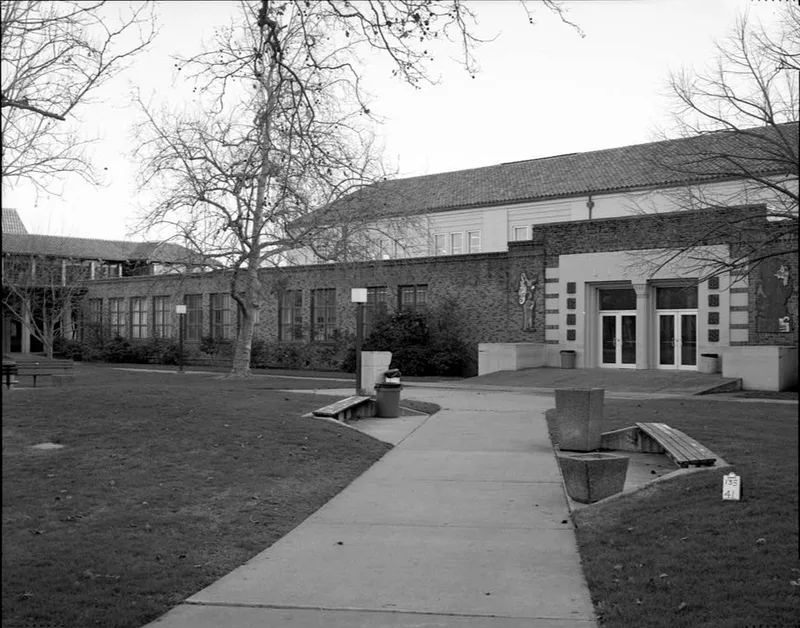
Six New Deal-era buildings on the Sacramento City College campus form a historic district of about 11 acres, designed by Sacramento architect Harry J. Devine Sr. with Public Works Administration grants. Three buildings make up the Annex: the Library and Classrooms, the Gymnasium and the Fine Arts Building, now the Auditorium. They were built around a quadrangle once partly framed by 1920s Romanesque Revival buildings, since razed. The Extensions followed about two years later and include the Engineering Technology Building and the Aeronautical Addition. The buildings share PWA Moderne styling, with reinforced concrete softened by brick, plus Mayan, Zigzag and arcade details. The Library has Mayan-style terra cotta panels and a stylized column, and the Auditorium lobby holds a restored Ralph Stackpole mural of 1930s Sacramento occupations. Despite window replacements and additions, the group keeps its overall integrity. It was listed for architecture and for its ties to government relief work and social history in the late 1930s.
Machine-generated summary. This summary was generated by a language model from the official nomination document and has not been reviewed line by line by an editor. It may contain errors. Check the source document before relying on any detail. Source: nomination document (PDF) · catalog entry. Generated October 2026 (model claude-sonnet-5-5, prompt v1.0-2026-10-29).
| Period of significance | 1936-39 |
|---|---|
| Styles | Modern Movement/Moderne (also Art Deco, Zigzag Moderne, Mayan revival, Romanesque Revival) |
| Areas of significance | Architecture, Politics/Government, Social History |
| Acreage | 11 |
| Boundary source | NPS cultural-resource GIS polygon |
| Full listing page | Sacramento Junior College Annex and Extensions (property record) |
What listing means for this property
This is a historic district. Buildings within its boundary are either contributing (they add to the district's significance) or non-contributing. Owners of contributing income-producing buildings can claim the 20% federal rehabilitation tax credit; homeowners should look at state credits. National Register districts impose no design review by themselves; a local historic district ordinance, if one exists, does (the difference explained).
General information, not legal or tax advice. Rules change; confirm with your State Historic Preservation Office or a qualified adviser.