Rispin Mansion

The National Park Service has not published a boundary polygon for this district; the map shows the listed properties inside it and the district's reference point.
Why it's listed
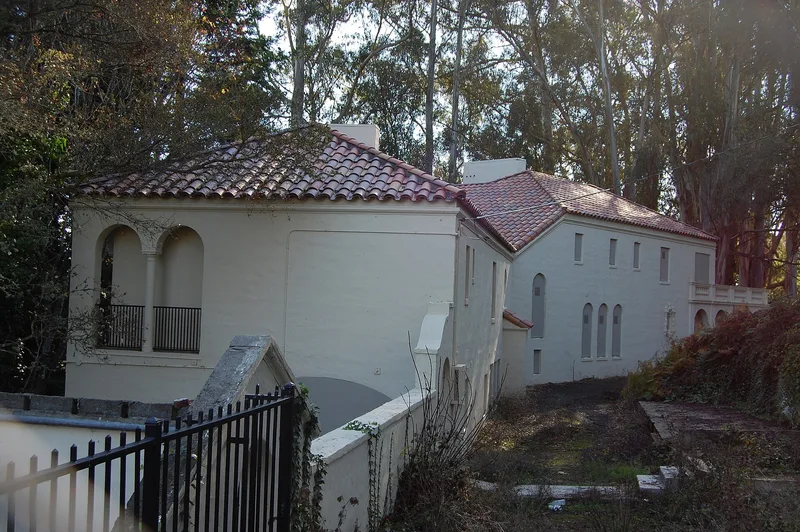
Perched on a hillside above Soquel Creek in Capitola, this 22-room, 10,000-square-foot mansion was built in 1921 for Henry Allen Rispin, a wealthy oil baron. Designed in a Mission/Spanish Colonial Revival style, it has four levels, reinforced concrete walls with plaster finish, tiled hip and gabled roofs, an arched entry portico, balustraded terraces and a large chimney with six flues. The 6.5-acre grounds hold a concrete pool and fountain, rock walls and steps, and a ca. 1922 well house. Rispin lived here from 1921 to 1929, during which he acquired most of the town, renamed it Capitola-by-the-Sea, and worked to turn a summer tent colony into a year-round resort, until the stock market crash ended his fortune. The house was left vacant for decades, and vandals destroyed much of the interior. The City of Capitola bought it in 1986 and found it structurally sound, with its exterior largely unaltered. It was listed for its link to Rispin and Capitola's resort development.
Machine-generated summary. This summary was generated by a language model from the official nomination document and has not been reviewed line by line by an editor. It may contain errors. Check the source document before relying on any detail. Source: nomination document (PDF) · catalog entry. Generated October 2026 (model claude-sonnet-5-5, prompt v1.0-2026-10-29).
| Period of significance | 1921-1929 |
|---|---|
| Styles | Mission/Spanish Colonial Revival |
| Areas of significance | Community Planning and Development |
| Acreage | 6.5 |
| Boundary source | not published |
| Full listing page | Rispin Mansion (property record) |
What listing means for this property
This is a historic district. Buildings within its boundary are either contributing (they add to the district's significance) or non-contributing. Owners of contributing income-producing buildings can claim the 20% federal rehabilitation tax credit; homeowners should look at state credits. National Register districts impose no design review by themselves; a local historic district ordinance, if one exists, does (the difference explained).
Noted as vacant in the nomination. Nomination documents can be decades old; current status may differ. If you are considering buying an empty listed property, read the due-diligence checklist.
General information, not legal or tax advice. Rules change; confirm with your State Historic Preservation Office or a qualified adviser.