Redwood City Historic Commercial Buildings

The National Park Service has not published a boundary polygon for this district; the map shows the listed properties inside it and the district's reference point.
Why it's listed
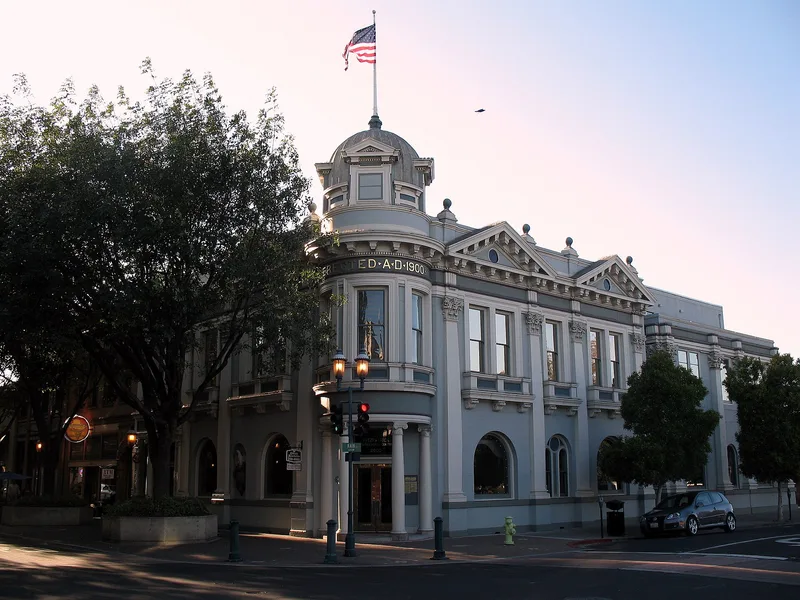
Four commercial buildings at the northwest corner of Broadway and Main Street in Redwood City form a district that traces the town's growth from a lumber-shipping landing to a county seat. The oldest is the Pioneer Store, built in brick in 1859 by John V. Diller near the old tidewater embarcadero. It is the city's oldest surviving commercial building and the first privately financed brick building in San Mateo County. Beside it stands the Bank of San Mateo County, completed in 1900 to designs by Alfred I. Coffey, with stone veneer, colossal pilasters and a domed corner entrance. The adjoining Fitzpatrick Building, from 1905, has a terra cotta brick front rebuilt after the 1906 earthquake. A 1928 Building & Loan structure completes the group. The buildings differ in era but fit together in scale and detail. The nomination presents them as the focal point of community life since pioneer days and as linked to early civic leaders.
Machine-generated summary. This summary was generated by a language model from the official nomination document and has not been reviewed line by line by an editor. It may contain errors. Check the source document before relying on any detail. Source: nomination document (PDF) · catalog entry. Generated October 2026 (model claude-sonnet-5-5, prompt v1.0-2026-10-29).
| Period of significance | 1800-1899, 1900- |
|---|---|
| Styles | Modified Classical Revival (Pioneer Store); Renaissance with Queen Anne corner treatment (Bank); 19th century Renaissance commercial (Fitzpatrick Building); late Italianate (Building & Loan) |
| Areas of significance | Commerce, Architecture |
| Acreage | 0.5 |
| Boundary source | not published |
| Full listing page | Redwood City Historic Commercial Buildings (property record) |
What listing means for this property
This is a historic district. Buildings within its boundary are either contributing (they add to the district's significance) or non-contributing. Owners of contributing income-producing buildings can claim the 20% federal rehabilitation tax credit; homeowners should look at state credits. National Register districts impose no design review by themselves; a local historic district ordinance, if one exists, does (the difference explained).
General information, not legal or tax advice. Rules change; confirm with your State Historic Preservation Office or a qualified adviser.