Redondo Beach Original Townsite Historic District

Why it's listed
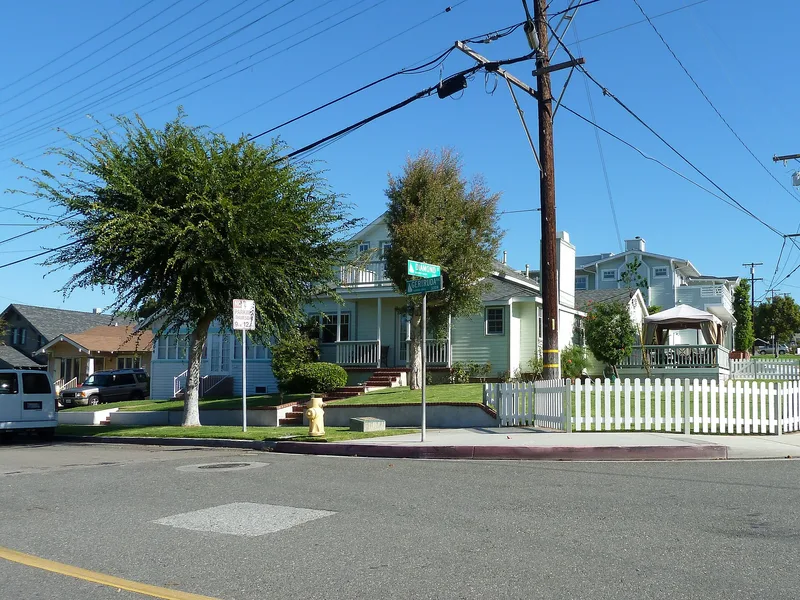
This residential district in Redondo Beach, California, covers several blocks around North Gertruda Avenue, Carnelian Street, North Guadalupe Avenue and Diamond Street. It holds one- and two-story houses, mostly sided in redwood clapboard, along with apartment buildings and many original garages and sheds. Craftsman bungalows and Colonial Revival houses predominate, with some neo-classical row houses and Mission-style buildings, all typical of Southern California in the early twentieth century. Most buildings date from about 1906 to the 1920s, when residents could see the Pacific Ocean five blocks to the west. Early occupants included Pacific Electric workers, shopkeepers, carpenters and Louis Molnar, mayor from 1916 to 1918. One rear house at 325 North Gertruda Avenue is described as one of the few original single-wall beach houses left in the city. Forty-nine buildings contribute to the district's character, and nineteen newer or altered ones do not. Integrity is rated moderately high, and most houses remain in good repair.
Machine-generated summary. This summary was generated by a language model from the official nomination document and has not been reviewed line by line by an editor. It may contain errors. Check the source document before relying on any detail. Source: nomination document (PDF) · catalog entry. Generated October 2026 (model claude-sonnet-5-5, prompt v1.0-2026-10-29).
| Styles | Bungalow/Craftsman; Mission/Spanish; Neo-Classical Revival/Colonial Revival |
|---|---|
| Areas of significance | Exploration/Settlement, Architecture |
| Acreage | 3.4 |
| Boundary source | NPS cultural-resource GIS polygon |
| Full listing page | Redondo Beach Original Townsite Historic District (property record) |
What listing means for this property
This is a historic district. Buildings within its boundary are either contributing (they add to the district's significance) or non-contributing. Owners of contributing income-producing buildings can claim the 20% federal rehabilitation tax credit; homeowners should look at state credits. National Register districts impose no design review by themselves; a local historic district ordinance, if one exists, does (the difference explained).
General information, not legal or tax advice. Rules change; confirm with your State Historic Preservation Office or a qualified adviser.