Rancho Camulos

Why it's listed
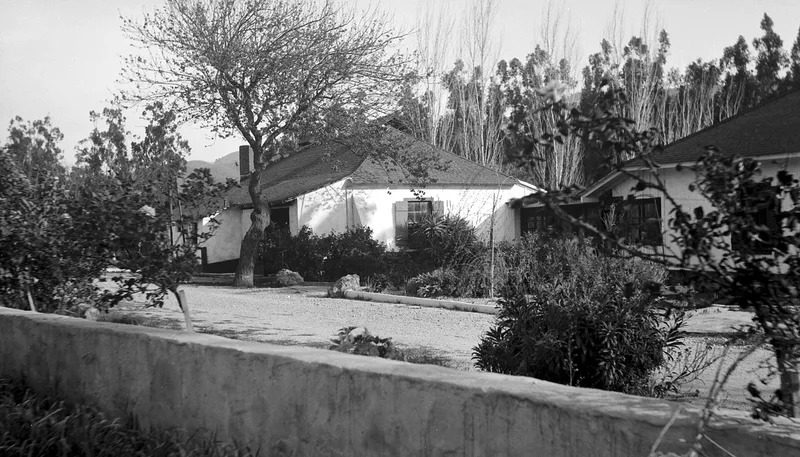
Rancho Camulos is an 1,800-acre citrus ranch in the Santa Clara River Valley near Piru, Ventura County. Its headquarters is anchored by the Ygnacio del Valle Adobe, begun around 1853 and expanded in phases into a U-shaped plan by the early twentieth century. Nearby are a brick winery built in 1867, a small wooden chapel, a bell structure, a brick fountain, and later Craftsman and Spanish Colonial Revival buildings. Across the highway stand railroad-related houses from 1887 and farm labor cottages from about 1916. The ranch is significant for the Del Valle family's agricultural and winemaking history and for its association with Helen Hunt Jackson's novel Ramona. After the book appeared in 1884 and the Southern Pacific arrived in 1887, visitors came to see the supposed home of the heroine, and the ranch was photographed, painted, and filmed in 1910. Its plan, setting, and working citrus landscape remain largely intact.
Machine-generated summary. This summary was generated by a language model from the official nomination document and has not been reviewed line by line by an editor. It may contain errors. Check the source document before relying on any detail. Source: nomination document (PDF) · catalog entry. Generated October 2026 (model claude-sonnet-5-5, prompt v1.0-2026-10-29).
| Period of significance | 1853-1941 |
|---|---|
| Styles | Spanish Colonial; Mission/Spanish Colonial Revival; Bungalow/Craftsman |
| Areas of significance | Exploration/Settlement, Social History, Agriculture, Architecture |
| Acreage | 40 |
| Boundary source | NPS cultural-resource GIS polygon |
| Full listing page | Rancho Camulos (property record) |
What listing means for this property
This is a historic district. Buildings within its boundary are either contributing (they add to the district's significance) or non-contributing. Owners of contributing income-producing buildings can claim the 20% federal rehabilitation tax credit; homeowners should look at state credits. National Register districts impose no design review by themselves; a local historic district ordinance, if one exists, does (the difference explained).
General information, not legal or tax advice. Rules change; confirm with your State Historic Preservation Office or a qualified adviser.