Railroad Square District (Additional Documentation)

Why it's listed
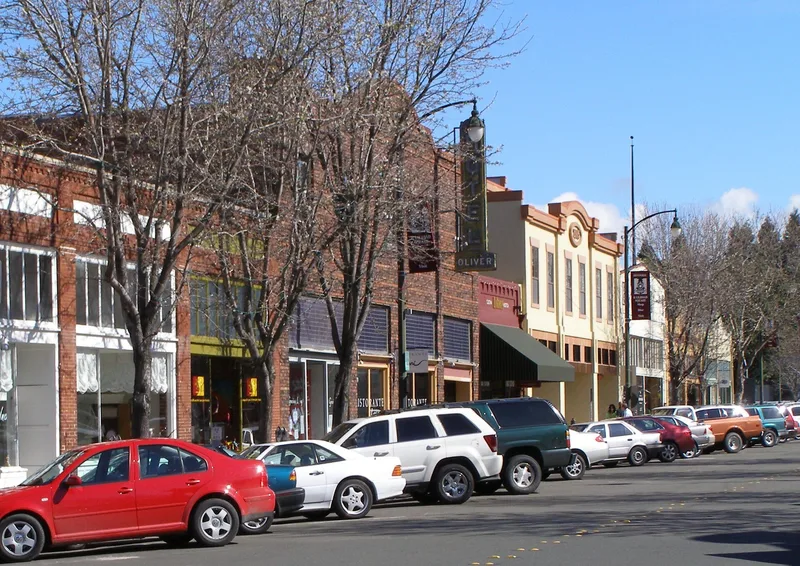
Railroad Square is a 23-acre district in Santa Rosa, California, centered on the 1904 railroad depot and a small park at the foot of Fourth Street. It holds about 38 numbered parcels, including brick warehouses built from 1888 to 1914, one-story brick and stucco storefronts along Fourth Street, two hotels, a water tower and the rail yards. The most important buildings are four stone structures around the park: the depot, the Western Hotel, the La Rose Hotel and the Railway Express Agency building. Italian stonemasons who immigrated around 1900 cut and set the local stone. The railroad reached Santa Rosa in 1871 and made this area the center of the city's industry, with a tannery, brewery, flour and woolen mills and wine cellars. Most buildings date from the rebuilding after the 1906 earthquake. Freeway construction in the 1960s cut the area off from downtown, which left its early character largely unchanged. Few comparable commercial brick buildings survive elsewhere in the city.
Machine-generated summary. This summary was generated by a language model from the official nomination document and has not been reviewed line by line by an editor. It may contain errors. Check the source document before relying on any detail. Source: nomination document (PDF) · catalog entry. Generated October 2026 (model claude-sonnet-5-5, prompt v1.0-2026-10-29).
| Period of significance | 1888-1923 |
|---|---|
| Styles | Mission Revival, Spanish Colonial Revival and simple early 20th-century brick commercial false-front buildings |
| Areas of significance | Commerce, Transportation, Architecture, Ethnic Heritage-European |
| Acreage | 23 |
| Boundary source | NPS cultural-resource GIS polygon |
| Full listing page | Railroad Square District (Additional Documentation) (property record) |
What listing means for this property
This is a historic district. Buildings within its boundary are either contributing (they add to the district's significance) or non-contributing. Owners of contributing income-producing buildings can claim the 20% federal rehabilitation tax credit; homeowners should look at state credits. National Register districts impose no design review by themselves; a local historic district ordinance, if one exists, does (the difference explained).
General information, not legal or tax advice. Rules change; confirm with your State Historic Preservation Office or a qualified adviser.