Price, John, House

The National Park Service has not published a boundary polygon for this district; the map shows the listed properties inside it and the district's reference point.
Why it's listed
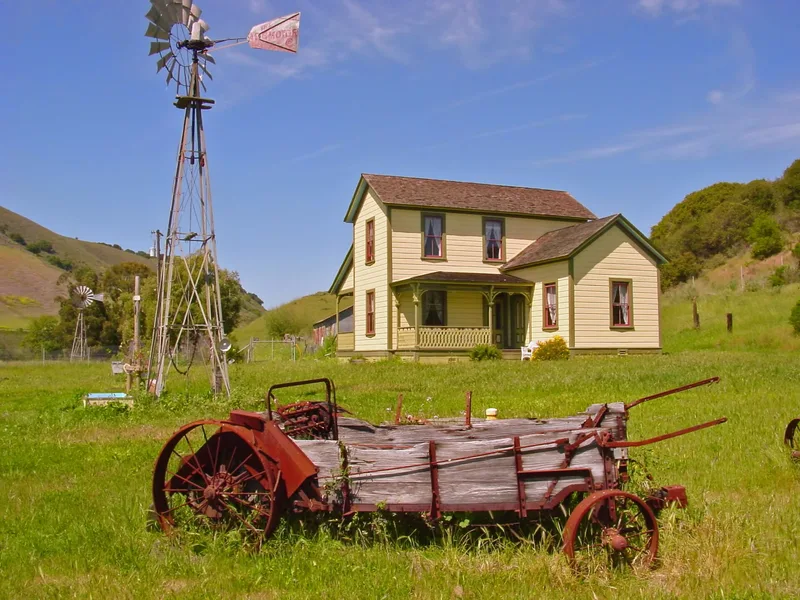
Built in 1893-94 in a quiet canyon near Pismo Beach, this wood-frame I-House was a gift from rancher John Michael Price to his wife Maria for their 50th anniversary. L.A. Lawrence served as contractor and builder. The house has horizontal drop siding, tall narrow two-over-two windows, and six rooms on two levels, with a one-story addition added within a year. Its front porch has been lost, and water, termite and foundation damage have affected the interior, though it has avoided major remodeling. It sits on four acres surrounded by agricultural fields, a remnant of Rancho El Pismo. Price was a British-born settler who held a large share of the rancho, served in county government, deeded railroad right-of-way through the canyon, and commissioned the 1886 town plat of Pismo Beach. The house is recognized as the oldest standing structure in the city and as an example of the move from adobe toward Anglo-style building.
Machine-generated summary. This summary was generated by a language model from the official nomination document and has not been reviewed line by line by an editor. It may contain errors. Check the source document before relying on any detail. Source: nomination document (PDF) · catalog entry. Generated October 2026 (model claude-sonnet-5-5, prompt v1.0-2026-10-29).
| Period of significance | 1893-1894 |
|---|---|
| Styles | Vernacular I-House (late 19th century wood-frame Victorian) |
| Areas of significance | Exploration/Settlement, Architecture |
| Acreage | 4 |
| Boundary source | not published |
| Full listing page | Price, John, House (property record) |
What listing means for this property
This is a historic district. Buildings within its boundary are either contributing (they add to the district's significance) or non-contributing. Owners of contributing income-producing buildings can claim the 20% federal rehabilitation tax credit; homeowners should look at state credits. National Register districts impose no design review by themselves; a local historic district ordinance, if one exists, does (the difference explained).
Noted as vacant in the nomination. Nomination documents can be decades old; current status may differ. If you are considering buying an empty listed property, read the due-diligence checklist.
General information, not legal or tax advice. Rules change; confirm with your State Historic Preservation Office or a qualified adviser.