Poppy Peak Historic District

Why it's listed
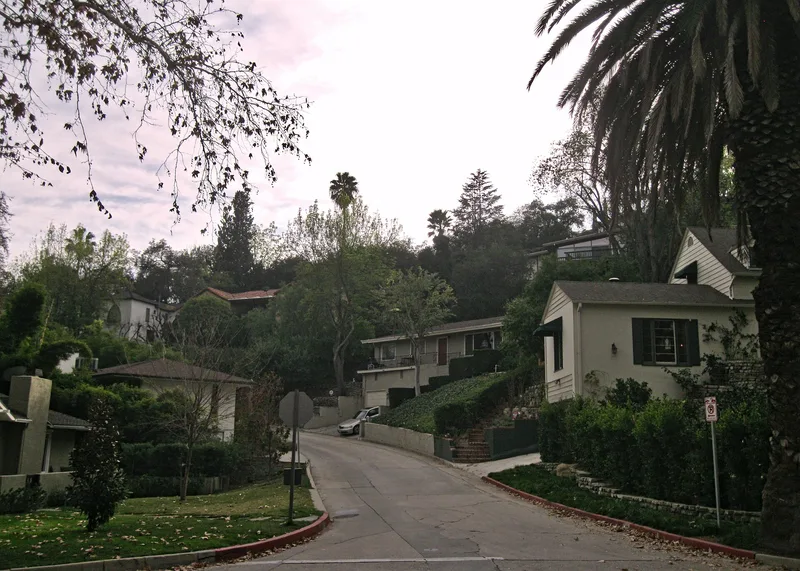
Poppy Peak Historic District is a hillside neighborhood in the far southwest corner of Pasadena, next to Eagle Rock and Highland Park. Covering about 12.29 acres, it takes in portions of Poppy Peak Drive, Kaweah Drive, Cresthaven Drive and Pleasant Way. Developed from the 1920s subdivision of Poppy Peak, the area has narrow, winding streets, no sidewalks, and dense native and imported planting that partly hides many houses. Its houses, mostly built between 1935 and 1968, show a wide range of Modern residential design. Architects include Richard Neutra, Harwell Hamilton Harris, Leland Evison and Lyman Ennis, among others. The district includes Harris's Laing House, an International Style work unlike his mature output, and Neutra's Perkins House, a representative 1950s design. Steep slopes and limited building regulations shaped low, compact houses. Contributing and non-contributing houses sit together comfortably, giving the district a cohesive character recognized for its architecture.
Machine-generated summary. This summary was generated by a language model from the official nomination document and has not been reviewed line by line by an editor. It may contain errors. Check the source document before relying on any detail. Source: nomination document (PDF) · catalog entry. Generated October 2026 (model claude-sonnet-5-5, prompt v1.0-2026-10-29).
| Period of significance | 1935-1968 |
|---|---|
| Styles | Modern Movement |
| Areas of significance | Architecture |
| Acreage | 12.3 |
| Boundary source | NPS cultural-resource GIS polygon |
| Full listing page | Poppy Peak Historic District (property record) |
What listing means for this property
This is a historic district. Buildings within its boundary are either contributing (they add to the district's significance) or non-contributing. Owners of contributing income-producing buildings can claim the 20% federal rehabilitation tax credit; homeowners should look at state credits. National Register districts impose no design review by themselves; a local historic district ordinance, if one exists, does (the difference explained).
General information, not legal or tax advice. Rules change; confirm with your State Historic Preservation Office or a qualified adviser.