Point Reyes Light Station

Why it's listed
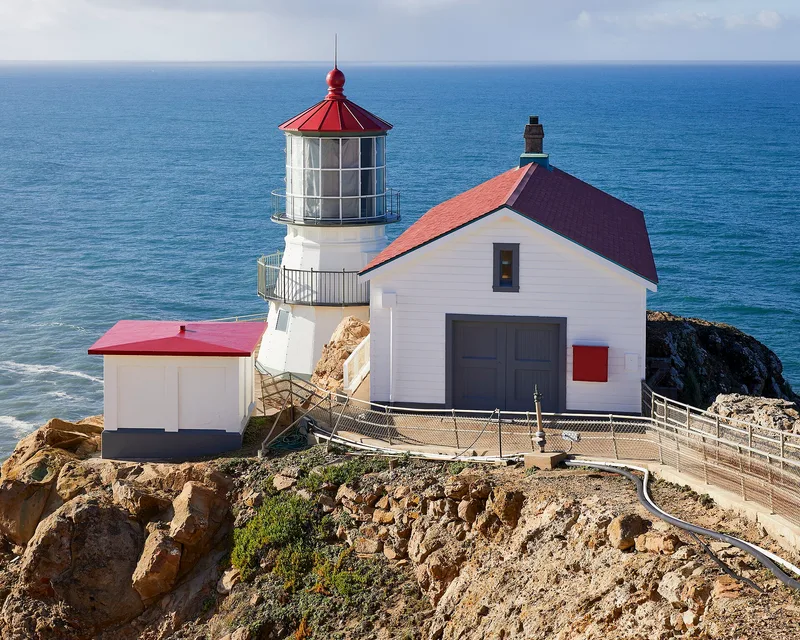
Point Reyes Light Station occupies the far tip of a headland that juts into the Pacific in Marin County, California. The lighthouse sits on a rocky shelf about 240 feet above the sea, and most other buildings are on the hilltop 300 feet above, reached by a long concrete stairway. The 1870 sixteen-sided iron tower still holds its original 1st order Fresnel lens, made in Paris in 1867. Congress authorized a light here in 1854, but disputes with landowners delayed construction until 1870, and seven major shipwrecks occurred in the interim. Building the station meant hauling materials over steep hills and carving terraces from solid rock. The site is among the windiest and foggiest on the Pacific coast. Historic buildings include a 1928 power house, a 1934 transformer building, storage sheds, cisterns and watersheds. Its integrity, intact tower and lens, and role in California's maritime transportation led to its listing for Criteria A and C.
Machine-generated summary. This summary was generated by a language model from the official nomination document and has not been reviewed line by line by an editor. It may contain errors. Check the source document before relying on any detail. Source: nomination document (PDF) · catalog entry. Generated October 2026 (model claude-sonnet-5-5, prompt v1.0-2026-10-29).
| Period of significance | 1870-1940 |
|---|---|
| Styles | Other: lighthouse |
| Areas of significance | Commerce, Transportation, Architecture, Maritime History |
| Acreage | 83 |
| Boundary source | NPS cultural-resource GIS polygon |
| Full listing page | Point Reyes Light Station (property record) |
What listing means for this property
This is a historic district. Buildings within its boundary are either contributing (they add to the district's significance) or non-contributing. Owners of contributing income-producing buildings can claim the 20% federal rehabilitation tax credit; homeowners should look at state credits. National Register districts impose no design review by themselves; a local historic district ordinance, if one exists, does (the difference explained).
General information, not legal or tax advice. Rules change; confirm with your State Historic Preservation Office or a qualified adviser.