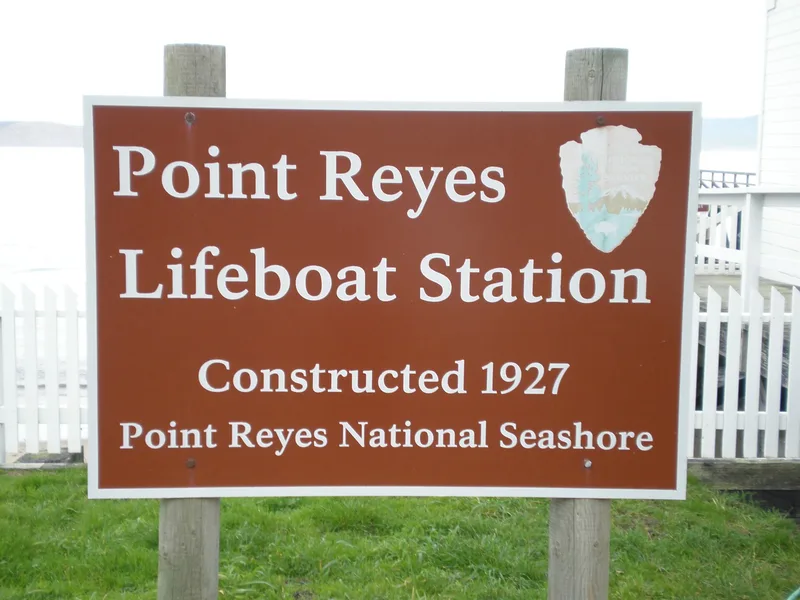
Point Reyes Lifeboat Rescue Station, 1927

Why it's listed
Built in 1927 on a sandy stretch of Drakes Bay, this Coast Guard lifeboat station replaced an earlier lifesaving station on Ten-Mile Beach and was placed in the lee of Point Reyes, where motor lifeboats could be launched in protected water. The complex centers on a two-and-a-half-story wood boathouse with crew quarters upstairs, a launchway with rails and cradles running into the bay, and a two-story officer-in-charge's residence. Garages, a powerhouse, a pumphouse, redwood water tanks and stone retaining walls remain on the hillside. A 36-foot motor lifeboat, built in 1953, is also associated with the site. The station is considered significant as a typical rail-launching station and the only unaltered example of its type on the Pacific Coast. It served shipping along a coastline where more than 30 vessels were lost. The Coast Guard closed it in 1968, and the National Park Service now owns it.
Machine-generated summary. This summary was generated by a language model from the official nomination document and has not been reviewed line by line by an editor. It may contain errors. Check the source document before relying on any detail. Source: nomination document (PDF) · catalog entry. Generated October 2026 (model claude-sonnet-5-5, prompt v1.0-2026-10-29).
| Period of significance | 1927-1939 |
|---|---|
| Styles | Coast Guard Standard Plan |
| Areas of significance | Commerce, Transportation, Maritime History, Social History |
| Acreage | 13 |
| Boundary source | NPS cultural-resource GIS polygon |
| Full listing page | Point Reyes Lifeboat Rescue Station, 1927 (property record) |
What listing means for this property
This is a historic district. Buildings within its boundary are either contributing (they add to the district's significance) or non-contributing. Owners of contributing income-producing buildings can claim the 20% federal rehabilitation tax credit; homeowners should look at state credits. National Register districts impose no design review by themselves; a local historic district ordinance, if one exists, does (the difference explained).
General information, not legal or tax advice. Rules change; confirm with your State Historic Preservation Office or a qualified adviser.