Pisgah Home Historic District

The National Park Service has not published a boundary polygon for this district; the map shows the listed properties inside it and the district's reference point.
Why it's listed
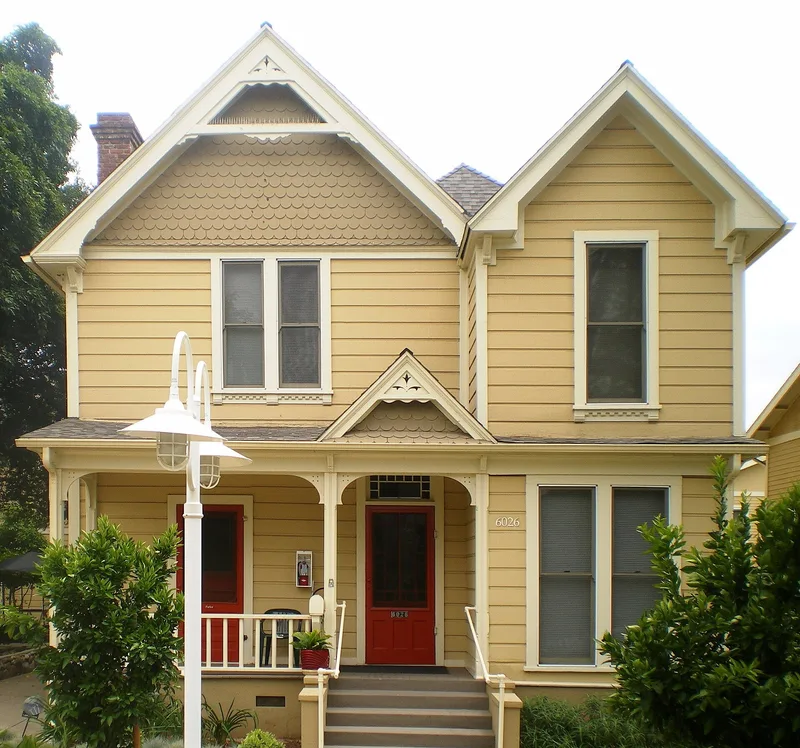
Pisgah Home Historic District is a group of eight buildings on a block in Los Angeles's Garvanza/Highland Park neighborhood. It grew around a house bought in 1895 by Dr. Finis E. Yoakum and his wife Mary, who opened it to poor and homeless people and founded the Pisgah Home Movement. The original Eastlake-style house gained a rear dormitory in 1901. A second Yoakum residence followed in 1903, and a barn-like tabernacle for testimonies, meetings and overflow sleeping space was completed in 1908. Later additions include a shotgun duplex, an open kitchen, a print shop that produced the Pisgah journal, and a Craftsman duplex. Seven buildings contribute to the district; a 2006 senior housing building does not. The group was listed for its link to the movement's religious and charitable mission, its range of early twentieth century styles, and its well-preserved character. A 2006 tax credit rehabilitation upgraded systems and repaired historic fabric.
Machine-generated summary. This summary was generated by a language model from the official nomination document and has not been reviewed line by line by an editor. It may contain errors. Check the source document before relying on any detail. Source: nomination document (PDF) · catalog entry. Generated October 2026 (model claude-sonnet-5-5, prompt v1.0-2026-10-29).
| Period of significance | 1895-1936 |
|---|---|
| Styles | Late 19th and 20th Century Revivals: Mission/Spanish Colonial Revival; Late 19th and Early 20th Century American Movements: Bungalow/Craftsman; Late Victorian: Stick/Eastlake |
| Areas of significance | Religion, Social History, Philosophy |
| Acreage | 1.8 |
| Boundary source | not published |
| Full listing page | Pisgah Home Historic District (property record) |
What listing means for this property
This is a historic district. Buildings within its boundary are either contributing (they add to the district's significance) or non-contributing. Owners of contributing income-producing buildings can claim the 20% federal rehabilitation tax credit; homeowners should look at state credits. National Register districts impose no design review by themselves; a local historic district ordinance, if one exists, does (the difference explained).
General information, not legal or tax advice. Rules change; confirm with your State Historic Preservation Office or a qualified adviser.