Patterson, George Washington, Ranch-Ardenwood

Why it's listed
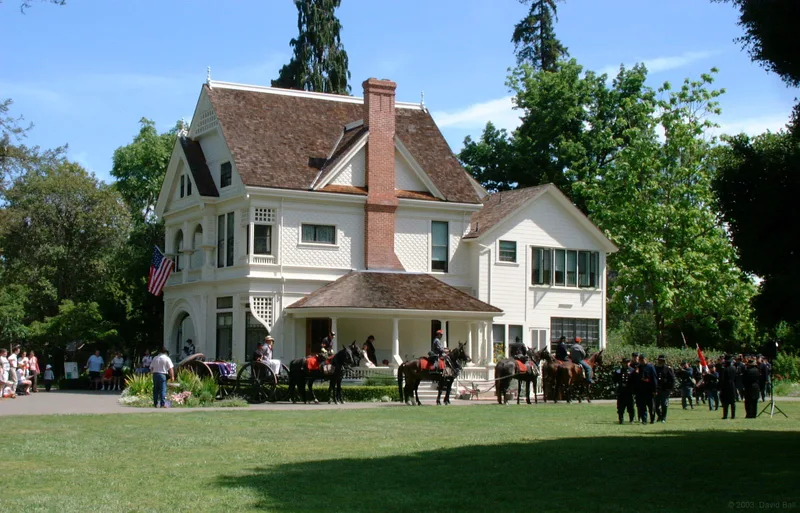
Ardenwood is a 131-acre district in Fremont that preserves the heart of a once vast ranch founded by George W. Patterson, a Forty-Niner who began ranching in Alameda County about 1851. At its center is the Patterson House, begun around 1856 as a small two-story redwood farmhouse and enlarged over time. A large Queen Anne addition of 1883 more than doubled its size, adding a corner tower, a horseshoe-arched entrance, decorative shingles and a colored glass and stucco frieze. Another wing followed about 1910-1914. Around the house stand six historic outbuildings, including a sandstone milk house, barns and a garage, along with a quarter-mile driveway lined with walnut and oak trees and a wide variety of planted specimens. By 1878 Patterson was the county's largest landholder, and the ranch employed many laborers, mostly Chinese. The surviving complex shows how a rural family home and farm grew over about sixty years, and it is considered one of the finest ranch complexes of its period in the county.
Machine-generated summary. This summary was generated by a language model from the official nomination document and has not been reviewed line by line by an editor. It may contain errors. Check the source document before relying on any detail. Source: nomination document (PDF) · catalog entry. Generated October 2026 (model claude-sonnet-5-5, prompt v1.0-2026-10-29).
| Period of significance | 1800-1899, 1900- (specific dates ca. 1856, 1883, 1914) |
|---|---|
| Styles | Queen Anne (1883 addition) |
| Areas of significance | Agriculture, Architecture |
| Acreage | 131 |
| Boundary source | NPS cultural-resource GIS polygon |
| Full listing page | Patterson, George Washington, Ranch-Ardenwood (property record) |
What listing means for this property
This is a historic district. Buildings within its boundary are either contributing (they add to the district's significance) or non-contributing. Owners of contributing income-producing buildings can claim the 20% federal rehabilitation tax credit; homeowners should look at state credits. National Register districts impose no design review by themselves; a local historic district ordinance, if one exists, does (the difference explained).
General information, not legal or tax advice. Rules change; confirm with your State Historic Preservation Office or a qualified adviser.