Park Place-Arroyo Terrace Historic District

The National Park Service has not published a boundary polygon for this district; the map shows the listed properties inside it and the district's reference point.
Why it's listed
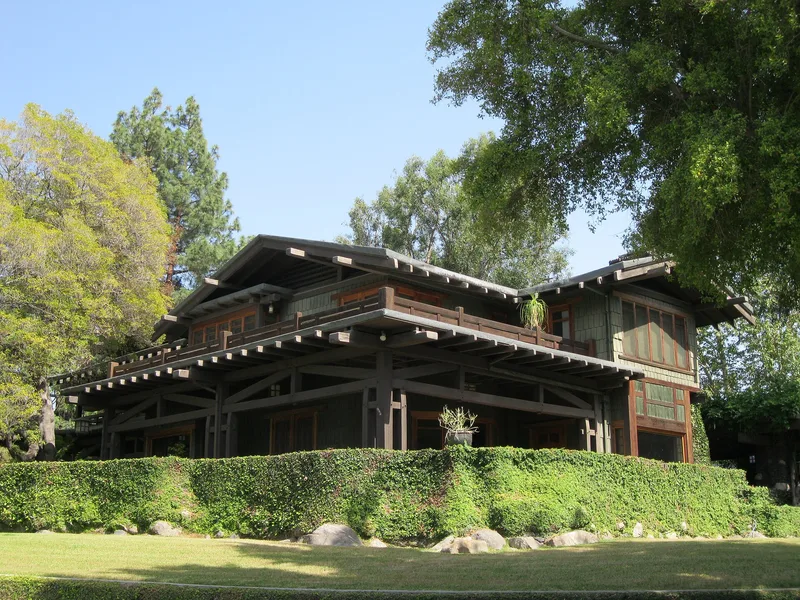
This 7.5-acre residential district in Pasadena occupies an irregular block bordered by Arroyo Terrace, North Grand Avenue and North Orange Grove Boulevard, just south of the Gamble House. Thirteen parcels make up the district, ten of which have contributing houses, garages and walls built mostly between 1901 and 1912. Greene & Greene designed seven of the ten contributing buildings, including Charles Greene's own family home at 368 Arroyo Terrace and a house for his three sisters-in-law, the White sisters, at 370. Other houses reflect Craftsman bungalow, Prairie School, English-influenced Arts and Crafts and Colonial Revival types. Sidewalks along Arroyo Terrace are brick, and many are edged with battered retaining walls of arroyo stone and clinker brick, which are described as outstanding examples of Charles Greene's masonry. Mature live oaks and other trees line the streets. The district was recognized for its architecture and its high degree of integrity, with later condominiums sited mostly inside the block and having little effect on the street views.
Machine-generated summary. This summary was generated by a language model from the official nomination document and has not been reviewed line by line by an editor. It may contain errors. Check the source document before relying on any detail. Source: nomination document (PDF) · catalog entry. Generated October 2026 (model claude-sonnet-5-5, prompt v1.0-2026-10-29).
| Period of significance | 1901-1912 |
|---|---|
| Styles | Late 19th and early 20th century revivals; Bungalow/Craftsman, Colonial Revival, English Revival, Prairie School |
| Areas of significance | Architecture |
| Acreage | 7.5 |
| Boundary source | not published |
| Full listing page | Park Place-Arroyo Terrace Historic District (property record) |
What listing means for this property
This is a historic district. Buildings within its boundary are either contributing (they add to the district's significance) or non-contributing. Owners of contributing income-producing buildings can claim the 20% federal rehabilitation tax credit; homeowners should look at state credits. National Register districts impose no design review by themselves; a local historic district ordinance, if one exists, does (the difference explained).
General information, not legal or tax advice. Rules change; confirm with your State Historic Preservation Office or a qualified adviser.