Orange Heights-Barnhart Tracts Historic District

Why it's listed
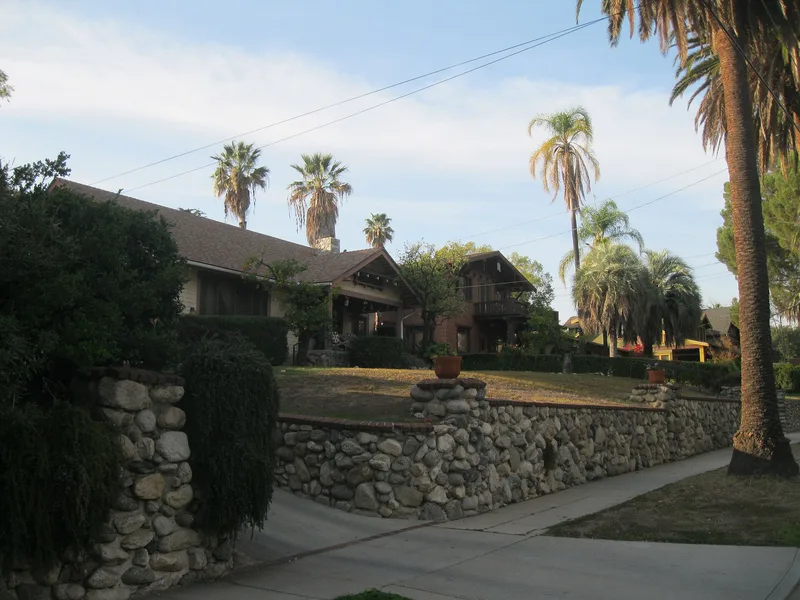
Orange Heights/Barnhart Tracts is a neighborhood of 84 buildings in northwest Pasadena, laid out when developer George F. Thompson subdivided the Orange Heights tract in 1906. Sixty-one buildings contribute to its character, and most are Craftsman bungalows built within about ten years of the subdivision. Nearly all were designed as single-family homes, with one duplex and a four-unit bungalow court. Typical features include wide gable roofs, exposed rafter tails, arroyo stone porches and foundations, shingle or wood siding, and porches that serve as outdoor rooms. Seventeen were built by local builder D. M. Renton, the largest group of his work in Pasadena, and six were designed by architects, among them Irving Gill. Elevated lots, uniform landscaped setbacks, arroyo stone retaining walls and mature street trees give the streets a consistent appearance, with views toward the San Gabriel Mountains. The district is recognized as a well-preserved example of Arts and Crafts housing from 1906 to 1930.
Machine-generated summary. This summary was generated by a language model from the official nomination document and has not been reviewed line by line by an editor. It may contain errors. Check the source document before relying on any detail. Source: nomination document (PDF) · catalog entry. Generated October 2026 (model claude-sonnet-5-5, prompt v1.0-2026-10-29).
| Period of significance | 1906-1930 |
|---|---|
| Styles | Bungalow/Craftsman |
| Areas of significance | Architecture |
| Acreage | 18.3 |
| Boundary source | NPS cultural-resource GIS polygon |
| Full listing page | Orange Heights-Barnhart Tracts Historic District (property record) |
What listing means for this property
This is a historic district. Buildings within its boundary are either contributing (they add to the district's significance) or non-contributing. Owners of contributing income-producing buildings can claim the 20% federal rehabilitation tax credit; homeowners should look at state credits. National Register districts impose no design review by themselves; a local historic district ordinance, if one exists, does (the difference explained).
General information, not legal or tax advice. Rules change; confirm with your State Historic Preservation Office or a qualified adviser.