Old Pasadena Historic District (Boundary Increase)

Why it's listed
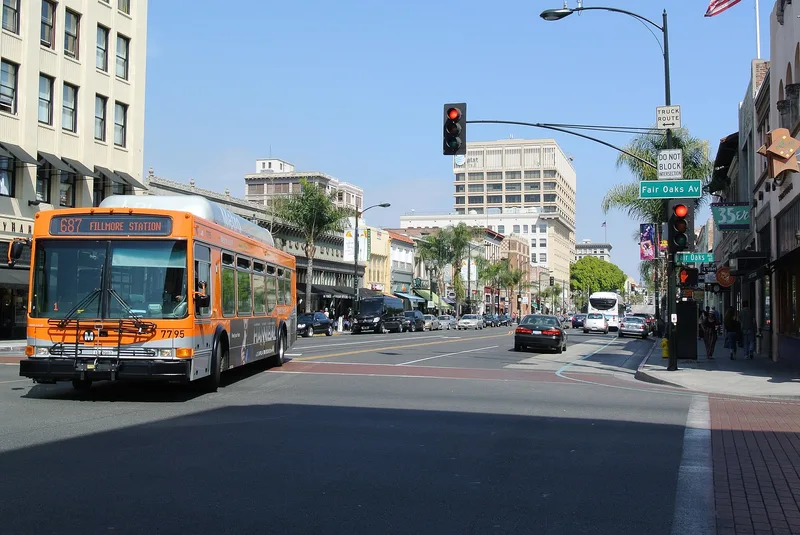
Old Pasadena is the historic downtown of Pasadena, California, and this amendment documents a district of 154 contributing and 40 noncontributing resources built between 1886 and 1936. Most buildings are two stories, with a few reaching eight, and the area also includes a train station, churches, some houses and Central Park. Three streets illustrate its stylistic eras. Fair Oaks Avenue preserves brick Victorian-era commercial buildings from the 1880s. Raymond Avenue, which became the main route between the resort hotels and downtown, shows a 1890s shift toward Classical design in buff brick and cast stone. Colorado Boulevard was widened in 1929 and 1930, and its facades were rebuilt largely in Spanish Colonial Revival, with some Art Deco examples. Side streets such as Union and Green retain simple industrial and automobile-related buildings. The district stayed relatively intact because commercial activity moved east, and rehabilitation efforts began in the 1980s, including a 1985 zoning overlay protecting buildings from demolition.
Machine-generated summary. This summary was generated by a language model from the official nomination document and has not been reviewed line by line by an editor. It may contain errors. Check the source document before relying on any detail. Source: nomination document (PDF) · catalog entry. Generated October 2026 (model claude-sonnet-5-5, prompt v1.0-2026-10-29).
| Styles | Late 19th and Early 20th Century Revivals (Beaux Arts, Mission/Spanish Colonial Revival); Modern Movement (Moderne, Art Deco) |
|---|---|
| Areas of significance | Commerce, Architecture |
| Acreage | 0.9 |
| Boundary source | NPS cultural-resource GIS polygon |
| Full listing page | Old Pasadena Historic District (Boundary Increase) (property record) |
What listing means for this property
This is a historic district. Buildings within its boundary are either contributing (they add to the district's significance) or non-contributing. Owners of contributing income-producing buildings can claim the 20% federal rehabilitation tax credit; homeowners should look at state credits. National Register districts impose no design review by themselves; a local historic district ordinance, if one exists, does (the difference explained).
General information, not legal or tax advice. Rules change; confirm with your State Historic Preservation Office or a qualified adviser.