Old Pasadena Historic District

Why it's listed
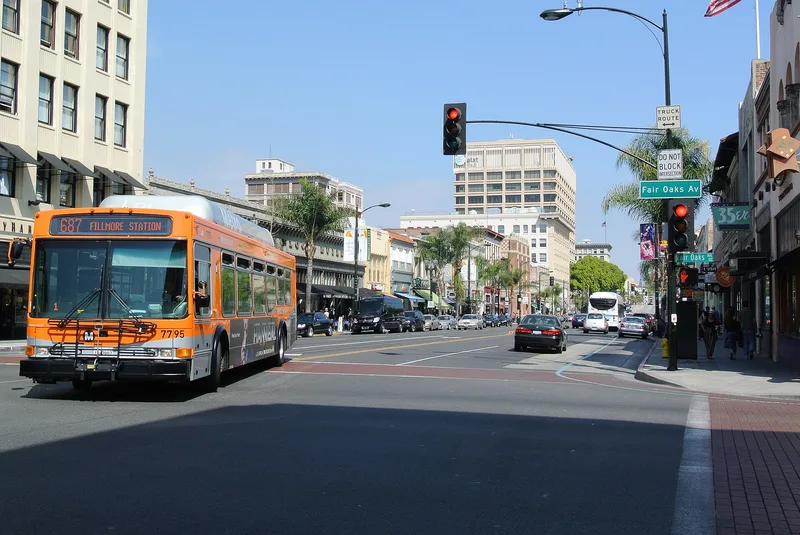
Old Pasadena is the historic downtown of Pasadena, California, made up of about 175 buildings erected between 1886 and 1930. Most are commercial, but the district also holds a large residential hotel complex, a train station, light industrial buildings, several churches and a park. Its streets show different periods. Fair Oaks reflects the 1880s boom, with brick Victorian storefronts. Raymond Avenue, which linked the resort hotels with downtown, took on buff brick and Classical ornament in the 1890s, and its two tallest buildings are concrete towers in a Chicago-influenced style. Colorado Boulevard carries the Spanish Colonial Revival facades added around 1929 and 1930, often when the street was widened. Alleys behind the main streets keep the simple brick service character of the older buildings. Modernization was mostly limited to storefronts, so the area remains a recognizable enclave of early Pasadena, and rehabilitation work was under way when it was listed.
Machine-generated summary. This summary was generated by a language model from the official nomination document and has not been reviewed line by line by an editor. It may contain errors. Check the source document before relying on any detail. Source: nomination document (PDF) · catalog entry. Generated October 2026 (model claude-sonnet-5-5, prompt v1.0-2026-10-29).
| Styles | Spanish Colonial Revival predominant, with Victorian, Beaux Arts, neo-Renaissance, Classical and Art Deco buildings |
|---|---|
| Areas of significance | Commerce, Architecture |
| Acreage | 54.4 |
| Boundary source | NPS cultural-resource GIS polygon |
| Full listing page | Old Pasadena Historic District (property record) |
What listing means for this property
This is a historic district. Buildings within its boundary are either contributing (they add to the district's significance) or non-contributing. Owners of contributing income-producing buildings can claim the 20% federal rehabilitation tax credit; homeowners should look at state credits. National Register districts impose no design review by themselves; a local historic district ordinance, if one exists, does (the difference explained).
General information, not legal or tax advice. Rules change; confirm with your State Historic Preservation Office or a qualified adviser.