New Almaden

Why it's listed
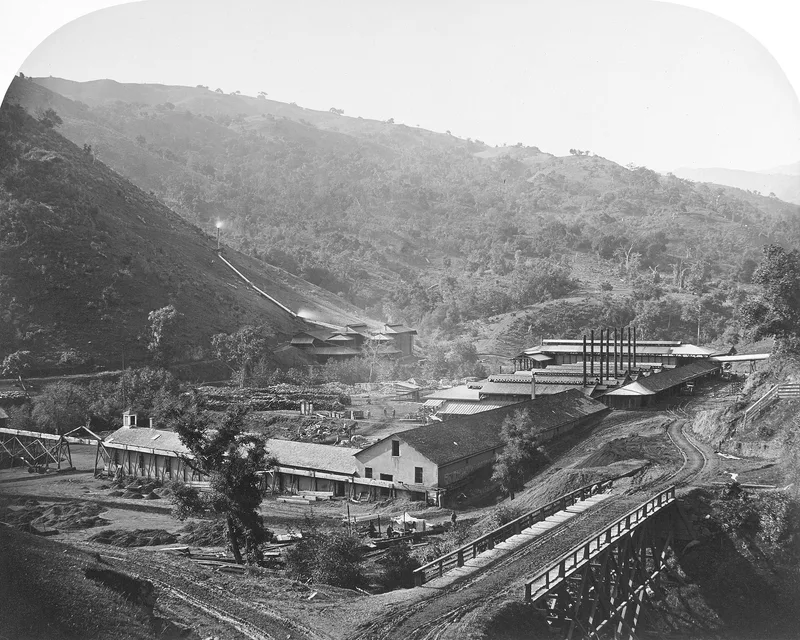
New Almaden is a former mercury mining town south of San Jose, California, now a quiet residential village along a wooded creek canyon. The settlement grew around the first quicksilver deposit discovered in North America, which was claimed in 1845 by Andreas Castillero. Under Henry W. Halleck, large-scale production began in 1850, and output reached about a million pounds a year by 1854. Because quicksilver was used to recover gold and silver from ore, the mine supplied the California gold fields and the Comstock Lode, and by 1865 it provided 60 percent of mercury consumed in California and Nevada. Surviving features include Casa Grande, the 1850s superintendent's residence of adobe and brick, early adobes, board-and-batten miners' cottages, a toll house and St. Anthony's Church of 1900. On Mine Hill, a school, store walls, brick chimneys, flumes and shafts remain. The area was recognized as a historic district for its central role in the mining frontier.
Machine-generated summary. This summary was generated by a language model from the official nomination document and has not been reviewed line by line by an editor. It may contain errors. Check the source document before relying on any detail. Source: nomination document (PDF) · catalog entry. Generated October 2026 (model claude-sonnet-5-5, prompt v1.0-2026-10-29).
| Period of significance | 1845 to present |
|---|---|
| Areas of significance | Industry |
| Acreage | 3200 |
| Boundary source | NPS cultural-resource GIS polygon |
| Full listing page | New Almaden (property record) |
What listing means for this property
This is a historic district. Buildings within its boundary are either contributing (they add to the district's significance) or non-contributing. Owners of contributing income-producing buildings can claim the 20% federal rehabilitation tax credit; homeowners should look at state credits. National Register districts impose no design review by themselves; a local historic district ordinance, if one exists, does (the difference explained).
General information, not legal or tax advice. Rules change; confirm with your State Historic Preservation Office or a qualified adviser.