Nevada City Downtown Historic District

Why it's listed
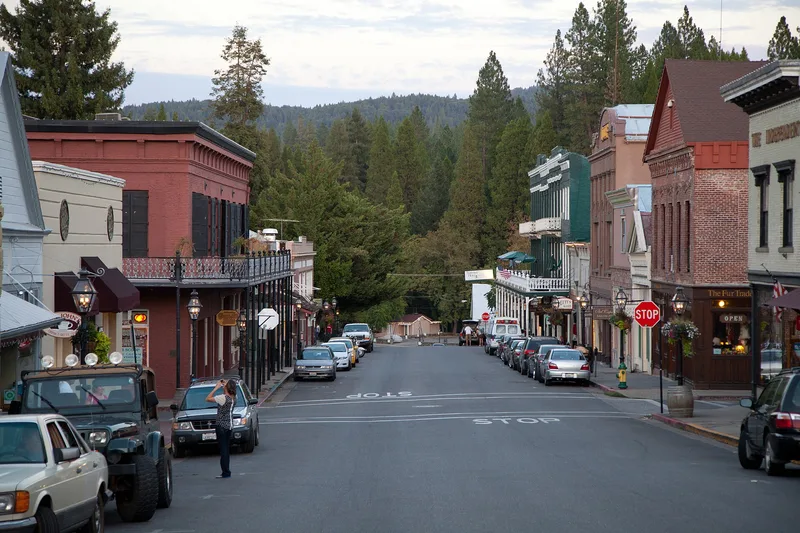
Nevada City's downtown core is a cluster of 96 buildings along Broad, Commercial, Main, Spring and Pine Streets, most of them from the latter half of the nineteenth century. During the gold-mining era the area served as the retail and local government center for one of California's largest mining communities. Many structures date from 1864, when the district was largely rebuilt after a disastrous fire in November 1863. Two-story business blocks with shops below and offices or housing above dominate, joined by three-story landmarks such as the National Hotel and the county courthouse. Victorian-influenced brick and frame commercial buildings and false-front vernacular structures set the character. Churches, fraternal halls, firehouses and civic buildings add variety. The district reflects a mining town as it looked between 1864 and 1917, when development largely paused. Despite some altered facades and the loss of buildings to fire and a 1969 freeway, it retains much of its historical and architectural integrity.
Machine-generated summary. This summary was generated by a language model from the official nomination document and has not been reviewed line by line by an editor. It may contain errors. Check the source document before relying on any detail. Source: nomination document (PDF) · catalog entry. Generated October 2026 (model claude-sonnet-5-5, prompt v1.0-2026-10-29).
| Period of significance | 1864-1917 |
|---|---|
| Styles | Victorian-influenced brick and frame commercial style, and western false-front vernacular |
| Areas of significance | Industry, Commerce, Exploration/Settlement, Politics/Government, Architecture, Invention |
| Acreage | 16 |
| Boundary source | NPS cultural-resource GIS polygon |
| Full listing page | Nevada City Downtown Historic District (property record) |
What listing means for this property
This is a historic district. Buildings within its boundary are either contributing (they add to the district's significance) or non-contributing. Owners of contributing income-producing buildings can claim the 20% federal rehabilitation tax credit; homeowners should look at state credits. National Register districts impose no design review by themselves; a local historic district ordinance, if one exists, does (the difference explained).
General information, not legal or tax advice. Rules change; confirm with your State Historic Preservation Office or a qualified adviser.