Naval Air Station Alameda Historic District

The National Park Service has not published a boundary polygon for this district; the map shows the listed properties inside it and the district's reference point.
Why it's listed
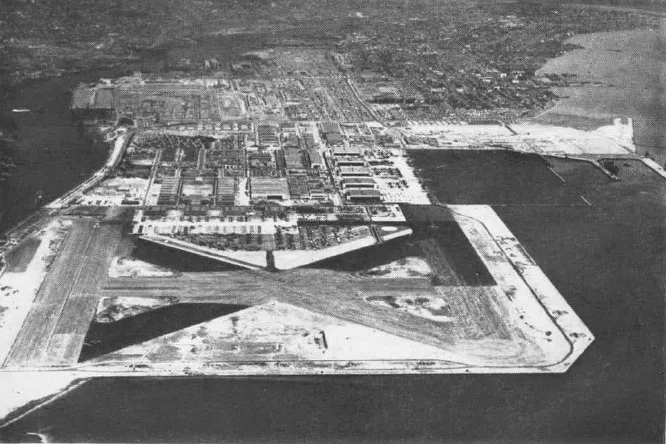
Naval Air Station Alameda occupies the western half of Alameda Island in San Francisco Bay, and its historic district covers about 406.5 acres of the former base. Construction began in 1938 under the Navy's Bureau of Yards and Docks, which planned the station as a single 'total base design' with a formal, symmetrical Beaux Arts layout. Four functional areas organize the district: the Administrative Core, Shops Area, Residential Area and Operations Area. Most prominent buildings, including the landplane and seaplane hangars, the Control Tower and the Administration Building, use the Moderne style. The district counts 100 contributing resources: 99 buildings and structures plus a designed landscape of evenly spaced plantings and sightlines. It was recognized for its role in the strategic growth of naval air stations in the 1930s, California's World War II naval build-up and Pacific operations, and for its architecture, landscape architecture and community planning. The period of significance runs from 1938 to 1945.
Machine-generated summary. This summary was generated by a language model from the official nomination document and has not been reviewed line by line by an editor. It may contain errors. Check the source document before relying on any detail. Source: nomination document (PDF) · catalog entry. Generated October 2026 (model claude-sonnet-5-5, prompt v1.0-2026-10-29).
| Period of significance | 1938-1945 |
|---|---|
| Styles | MODERN MOVEMENT / Moderne |
| Areas of significance | Architecture, Community Planning and Development, Landscape Architecture, Military |
| Acreage | 406.5 |
| Boundary source | not published |
| Full listing page | Naval Air Station Alameda Historic District (property record) |
What listing means for this property
This is a historic district. Buildings within its boundary are either contributing (they add to the district's significance) or non-contributing. Owners of contributing income-producing buildings can claim the 20% federal rehabilitation tax credit; homeowners should look at state credits. National Register districts impose no design review by themselves; a local historic district ordinance, if one exists, does (the difference explained).
General information, not legal or tax advice. Rules change; confirm with your State Historic Preservation Office or a qualified adviser.