Monterey Street Historic District

Why it's listed
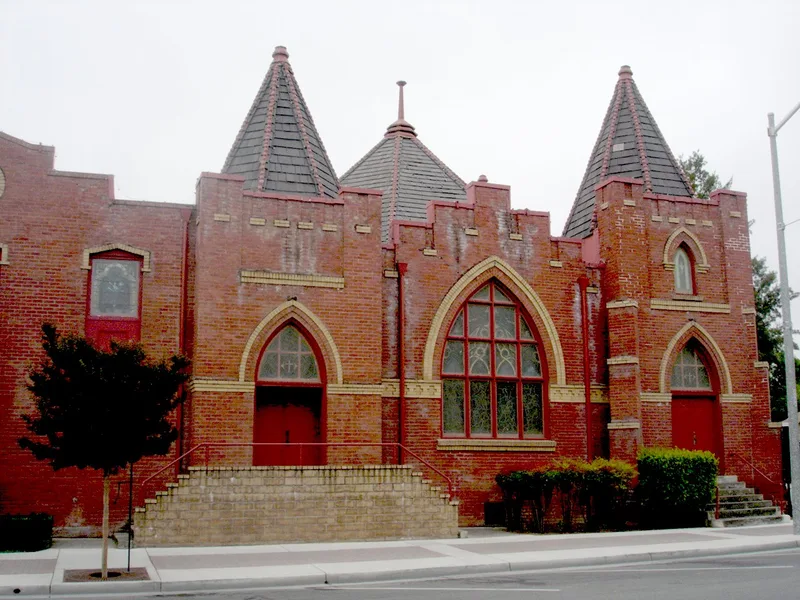
Monterey Street forms the spine of a residential neighborhood in Hollister, part of the city's original street grid and lined with large trees. The district takes in six blocks of Monterey and five crossing streets, with 252 buildings. Most are single-family houses with garages or second units, plus three churches, a medical clinic in the former Hazel Hawkins Hospital, and a bungalow court. Houses sit on lawns set back from the sidewalk, with side yards and driveways. Designs range from simple vernacular forms such as the gable-and-wing, hall-and-parlor and I-house to carefully executed Queen Anne, Craftsman, Gothic Revival, Italianate, Mission Revival and Prairie examples. The district was recognized for its architecture and for preserving the look of a neighborhood from before 1942. Of its buildings, 188 contribute to its character and 64 do not, most of those being newer garages and second units. Its period of significance runs from 1875 to 1941.
Machine-generated summary. This summary was generated by a language model from the official nomination document and has not been reviewed line by line by an editor. It may contain errors. Check the source document before relying on any detail. Source: nomination document (PDF) · catalog entry. Generated October 2026 (model claude-sonnet-5-5, prompt v1.0-2026-10-29).
| Period of significance | 1875-1941 |
|---|---|
| Styles | Late Victorian: Queen Anne; Late 19th and Early 20th Century Movements: Craftsman; Other: Gable-Front-and-Wing House |
| Areas of significance | Architecture |
| Acreage | 115 |
| Boundary source | NPS cultural-resource GIS polygon |
| Full listing page | Monterey Street Historic District (property record) |
What listing means for this property
This is a historic district. Buildings within its boundary are either contributing (they add to the district's significance) or non-contributing. Owners of contributing income-producing buildings can claim the 20% federal rehabilitation tax credit; homeowners should look at state credits. National Register districts impose no design review by themselves; a local historic district ordinance, if one exists, does (the difference explained).
General information, not legal or tax advice. Rules change; confirm with your State Historic Preservation Office or a qualified adviser.