Martinez Historical District

The National Park Service has not published a boundary polygon for this district; the map shows the listed properties inside it and the district's reference point.
Why it's listed
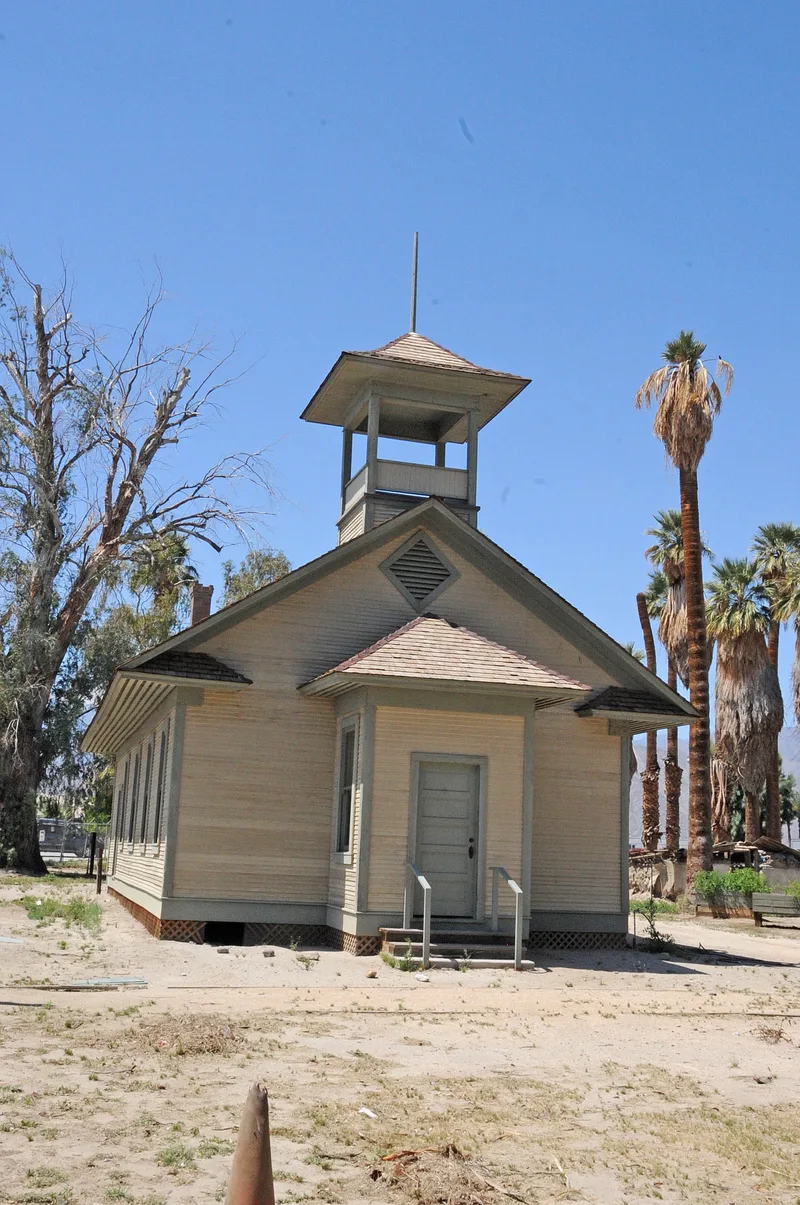
Located on the Torres-Martinez Indian Reservation in Riverside County, California, this district centers on the former Martinez Indian Agency. Three wood-clad buildings completed by 1907 survive: a schoolhouse with a bell tower, an agency office and an agent's residence, all with high-pitched shingled roofs. They are described as the oldest standing Indian agency buildings in California. The reservation itself was established in 1876 by order of President Grant. Nearby are a palm grove, a modern tribal meeting hall, a large archaeological site that has yielded late prehistoric potsherds and projectile points, and several walk-in Cahuilla water wells. Early records describe an Indian village here in 1853 and rancherias with agricultural fields in 1856, suggesting farming was adopted after the ancient lake receded. The buildings still serve the community, hosting church services and fiestas, though they need repair and face fire risk. The district was marked as a county historical landmark.
Machine-generated summary. This summary was generated by a language model from the official nomination document and has not been reviewed line by line by an editor. It may contain errors. Check the source document before relying on any detail. Source: nomination document (PDF) · catalog entry. Generated October 2026 (model claude-sonnet-5-5, prompt v1.0-2026-10-29).
| Styles | Early 20th-century governmental architecture; clapboard-clad buildings with high-pitched shingled roofs and Victorian-style porch posts |
|---|---|
| Areas of significance | Historic - Aboriginal, Agriculture, Architecture |
| Acreage | 1280 |
| Boundary source | not published |
| Full listing page | Martinez Historical District (property record) |
What listing means for this property
This is a historic district. Buildings within its boundary are either contributing (they add to the district's significance) or non-contributing. Owners of contributing income-producing buildings can claim the 20% federal rehabilitation tax credit; homeowners should look at state credits. National Register districts impose no design review by themselves; a local historic district ordinance, if one exists, does (the difference explained).
General information, not legal or tax advice. Rules change; confirm with your State Historic Preservation Office or a qualified adviser.