Mariposa Town Historic District

Why it's listed
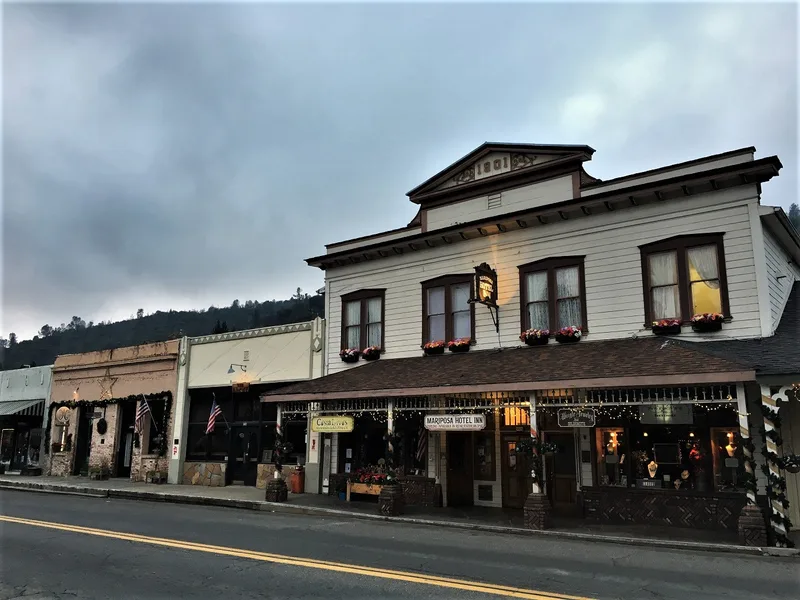
Mariposa's historic district preserves the core of a Gold Rush and mining town in the Sierra foothills. Commercial buildings of brick, adobe and Victorian false-front design line Charles Street, many terraced into the hillside and fitted with iron fire shutters after town fires in 1858 and 1866. Behind them, a grid of streets holds houses ranging from vernacular Gold Rush cottages to Craftsman bungalows and Spanish Revival homes built up to about 1940. Public buildings include the 1854 county courthouse, described as the oldest courthouse in continuous use in California, and a granite jail from 1858. The Fremont Office-Adobe is thought to be the oldest surviving structure in the town and the only one still standing that John C. Fremont used in the early 1850s. The district was recognized for its ties to mining and commerce, for the Fremont connection, and for its collection of early architecture. Of 101 buildings, 63 contribute to its character.
Machine-generated summary. This summary was generated by a language model from the official nomination document and has not been reviewed line by line by an editor. It may contain errors. Check the source document before relying on any detail. Source: nomination document (PDF) · catalog entry. Generated October 2026 (model claude-sonnet-5-5, prompt v1.0-2026-10-29).
| Period of significance | 1850-1940 |
|---|---|
| Styles | Greek Revival; Mission/Spanish Colonial Revival; Bungalow/Craftsman |
| Areas of significance | Industry, Commerce, Politics/Government, Architecture |
| Acreage | 120 |
| Boundary source | NPS cultural-resource GIS polygon |
| Full listing page | Mariposa Town Historic District (property record) |
What listing means for this property
This is a historic district. Buildings within its boundary are either contributing (they add to the district's significance) or non-contributing. Owners of contributing income-producing buildings can claim the 20% federal rehabilitation tax credit; homeowners should look at state credits. National Register districts impose no design review by themselves; a local historic district ordinance, if one exists, does (the difference explained).
General information, not legal or tax advice. Rules change; confirm with your State Historic Preservation Office or a qualified adviser.