Manzanita Lake Naturalist's Services Historic District

Why it's listed
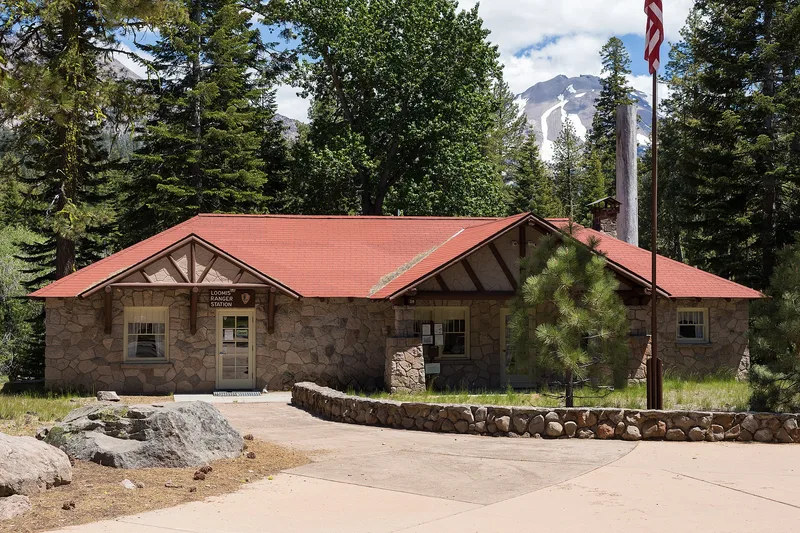
Manzanita Lake, the first developed area visitors meet at the Northwest Entrance of Lassen Volcanic National Park, has served since the late 1920s as the center of the park's interpretive program. The district brings together the stone Loomis Museum, built by Benjamin Loomis in 1927 and donated to the National Park Service in 1929, a small seismograph building with embedded obsidian, the Loomis residence and studio, and the naturalist's residence and garage completed in 1934. Manzanita and Reflection lakes and a trail system finished in 1936 and resurfaced in 1946 were used for talks and guided walks on the area's flora and volcanic geology. The buildings follow Italian Renaissance and NPS Rustic styles, with native stone prominent. Although the lodge, cabins and original campground have been removed, the naturalist's services infrastructure remains largely intact, which supports the district's listing.
Machine-generated summary. This summary was generated by a language model from the official nomination document and has not been reviewed line by line by an editor. It may contain errors. Check the source document before relying on any detail. Source: nomination document (PDF) · catalog entry. Generated October 2026 (model claude-sonnet-5-5, prompt v1.0-2026-10-29).
| Styles | Italian Renaissance; NPS Rustic |
|---|---|
| Areas of significance | Entertainment/Recreation, Science, Conservation, Architecture |
| Acreage | 85 |
| Boundary source | NPS cultural-resource GIS polygon |
| Full listing page | Manzanita Lake Naturalist's Services Historic District (property record) |
What listing means for this property
This is a historic district. Buildings within its boundary are either contributing (they add to the district's significance) or non-contributing. Owners of contributing income-producing buildings can claim the 20% federal rehabilitation tax credit; homeowners should look at state credits. National Register districts impose no design review by themselves; a local historic district ordinance, if one exists, does (the difference explained).
General information, not legal or tax advice. Rules change; confirm with your State Historic Preservation Office or a qualified adviser.