Lower Arroyo Seco Historic District

Why it's listed
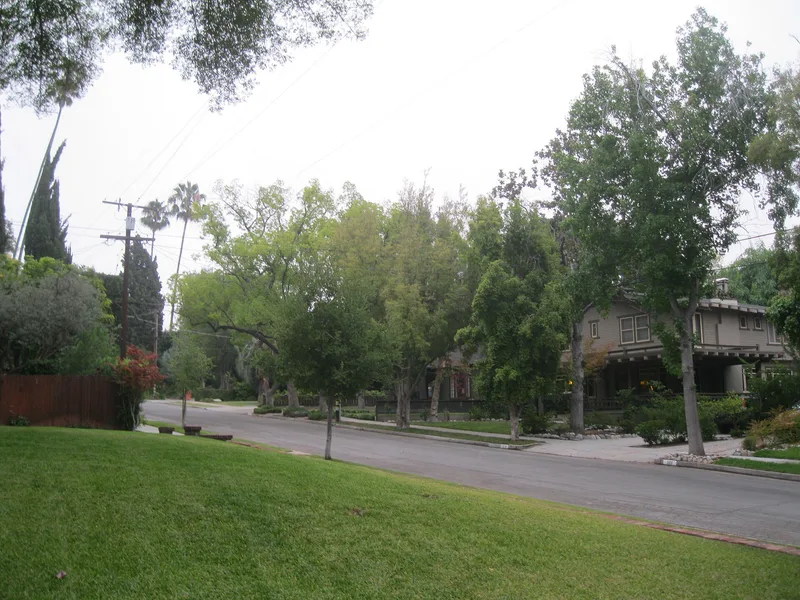
This residential district occupies the southwest corner of Pasadena beside the Arroyo Seco, a dry riverbed used as a natural park. It includes houses along South Arroyo Boulevard, West California Boulevard and La Loma Road, mostly built in the early 1900s. Of 102 properties, 78 contribute, along with 16 retaining walls. The houses are bungalows and two-story Arts and Crafts residences, some with Swiss chalet, English or Colonial Revival influences. Builders favored natural materials: dark wood shingle or clapboard siding, low-pitched roofs, and foundations, chimneys and walls made of arroyo cobblestone. Houses sit low on their sites and are screened by retaining walls, oaks, eucalyptus and palms. One property, the Ernest A. Batchelder house and studio, was already listed individually. The district meets the registration requirements of a multiple property listing on Pasadena's Arts and Crafts residential architecture, and its contributing buildings retain a high degree of integrity despite some unobtrusive newer infill.
Machine-generated summary. This summary was generated by a language model from the official nomination document and has not been reviewed line by line by an editor. It may contain errors. Check the source document before relying on any detail. Source: nomination document (PDF) · catalog entry. Generated October 2026 (model claude-sonnet-5-5, prompt v1.0-2026-10-29).
| Styles | Bungalow, Colonial Revival, Tudor Revival; Arts and Crafts period styles including Anglo-Colonial Revival, English-influenced and Swiss Chalet |
|---|---|
| Areas of significance | Architecture |
| Boundary source | NPS cultural-resource GIS polygon |
| Full listing page | Lower Arroyo Seco Historic District (property record) |
What listing means for this property
This is a historic district. Buildings within its boundary are either contributing (they add to the district's significance) or non-contributing. Owners of contributing income-producing buildings can claim the 20% federal rehabilitation tax credit; homeowners should look at state credits. National Register districts impose no design review by themselves; a local historic district ordinance, if one exists, does (the difference explained).
General information, not legal or tax advice. Rules change; confirm with your State Historic Preservation Office or a qualified adviser.