Los Gatos Historic Commercial District

The National Park Service has not published a boundary polygon for this district; the map shows the listed properties inside it and the district's reference point.
Why it's listed
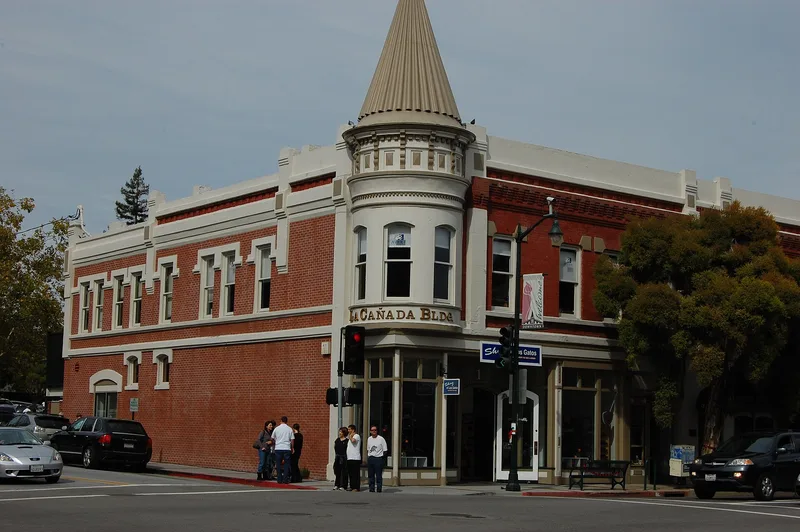
Along West Main Street, North Santa Cruz Avenue and University Avenue in Los Gatos, 25 buildings form a compact commercial district on a level bluff above Los Gatos Creek. Nineteen contribute to its character, including a river-rock Bungalow house. Most are one or two stories with large display windows and strong cornices, and their trim ranges from Queen Anne to Art Deco, with Mission Revival and Classical or Colonial Revival common. A witch-hatted Queen Anne corner tower has become a symbol of Victorian Los Gatos. The district grew after the railroad reached town in 1877 and drew commerce west of the creek. Fires shaped it: the 1891 blaze led to brick construction requirements, and the 1901 fire destroyed both sides of West Main Street, which were rebuilt by 1910. Storefronts have been modernized repeatedly, yet about three-fourths of the district keeps the integrity of its 1941 form. Repairs followed the 1989 Loma Prieta Earthquake.
Machine-generated summary. This summary was generated by a language model from the official nomination document and has not been reviewed line by line by an editor. It may contain errors. Check the source document before relying on any detail. Source: nomination document (PDF) · catalog entry. Generated October 2026 (model claude-sonnet-5-5, prompt v1.0-2026-10-29).
| Styles | Enframed window wall commercial storefronts; Mission Revival, Queen Anne, Romanesque, Italian Renaissance, Art Deco, Bungalow, and late 19th and 20th century revivals |
|---|---|
| Areas of significance | Commerce, Architecture |
| Acreage | 5 |
| Boundary source | not published |
| Full listing page | Los Gatos Historic Commercial District (property record) |
What listing means for this property
This is a historic district. Buildings within its boundary are either contributing (they add to the district's significance) or non-contributing. Owners of contributing income-producing buildings can claim the 20% federal rehabilitation tax credit; homeowners should look at state credits. National Register districts impose no design review by themselves; a local historic district ordinance, if one exists, does (the difference explained).
General information, not legal or tax advice. Rules change; confirm with your State Historic Preservation Office or a qualified adviser.