Locke Historic District

Why it's listed
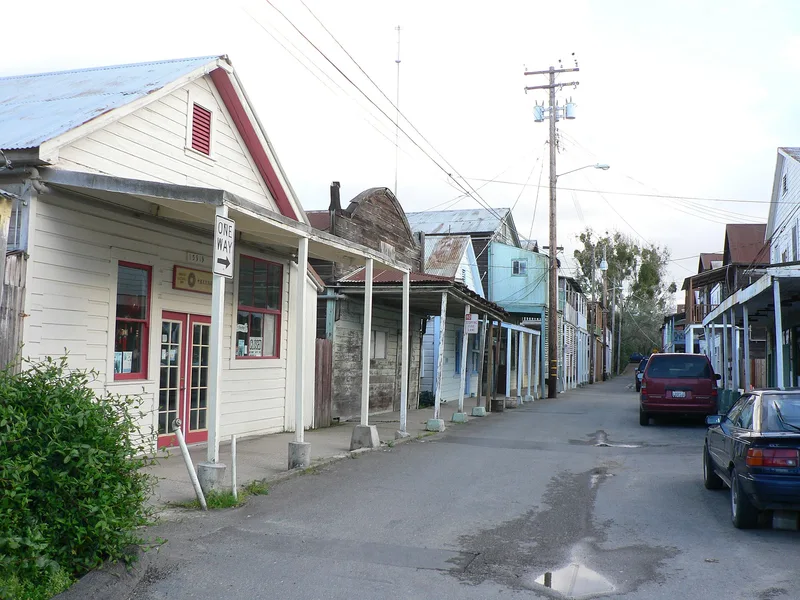
Locke is a small river town on the Sacramento River levee in Sacramento County, California. Founded in 1915, it consists of about four blocks of one- and two-story commercial and residential buildings, with a single narrow main street one block from the levee. After a fire destroyed most of the Chinese section of Walnut Grove in 1915, a group of ten to twelve Chinese businessmen led by Charlie Lee Bing moved about a mile upstream onto land owned by the Locke family and established the town. The wooden, false-fronted buildings with balconies nearly touching across the street reflect the architecture of turn-of-the-century river towns. Many were unpainted and leaning, and most commercial space was unoccupied when described. The district was listed because it was seen as the last vestige of a Chinese community founded by people who helped build the transcontinental railroad and the Delta levees. Its residents were mainly elderly Chinese speakers of Cantonese, and no new building had been added in fifty years.
Machine-generated summary. This summary was generated by a language model from the official nomination document and has not been reviewed line by line by an editor. It may contain errors. Check the source document before relying on any detail. Source: nomination document (PDF) · catalog entry. Generated October 2026 (model claude-sonnet-5-5, prompt v1.0-2026-10-29).
| Period of significance | 1915 |
|---|---|
| Styles | False-fronted, woodcutters' gothic commercial structures typical of turn-of-the-century small river towns |
| Areas of significance | Asian, Architecture, Social History |
| Acreage | 14 |
| Boundary source | NPS cultural-resource GIS polygon |
| Full listing page | Locke Historic District (property record) |
What listing means for this property
This is a historic district. Buildings within its boundary are either contributing (they add to the district's significance) or non-contributing. Owners of contributing income-producing buildings can claim the 20% federal rehabilitation tax credit; homeowners should look at state credits. National Register districts impose no design review by themselves; a local historic district ordinance, if one exists, does (the difference explained).
General information, not legal or tax advice. Rules change; confirm with your State Historic Preservation Office or a qualified adviser.