Lincoln Park Historic District

Why it's listed
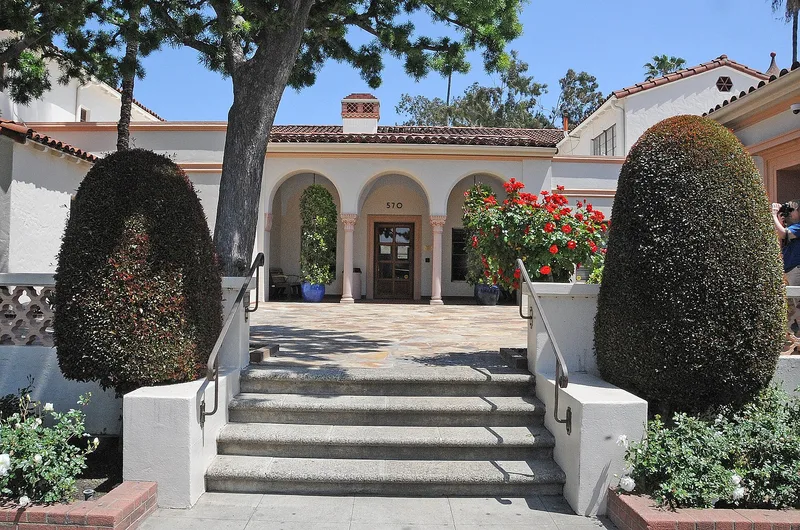
Lincoln Park Historic District is a 45-block neighborhood of roughly 230 acres just north of downtown Pomona, at the eastern edge of Los Angeles County. It takes its name from Lincoln Park, a nearly circular city park founded in 1908 that anchors the northeast part of the district and is ringed by architecturally notable houses. The district holds 826 primary buildings, built mostly between the 1890s and 1940s, and is dominated by single-family homes. Late Victorian and National Folk houses sit alongside many Craftsman bungalows, often finished in river rock and clapboard, and a range of Revival styles such as Spanish Eclectic, Colonial Revival and Mission. Larger landmarks include Saint Paul's Church, a 1930 Mission Revival building designed by Carlton Monroe Winslow, and the 1928 Casa Bonita Apartments. Four historic hitching posts and the park's parkway trees add to the period streetscape. The mix of styles from successive building periods is the district's main strength.
Machine-generated summary. This summary was generated by a language model from the official nomination document and has not been reviewed line by line by an editor. It may contain errors. Check the source document before relying on any detail. Source: nomination document (PDF) · catalog entry. Generated October 2026 (model claude-sonnet-5-5, prompt v1.0-2026-10-29).
| Styles | Late Victorian (Queen Anne, Shingle); Bungalow/Craftsman/Prairie School; Late 19th and Early 20th Century Revival (Colonial, Mission/Spanish Colonial, Tudor, Classical); Moderne; National Folk/Minimal Traditional |
|---|---|
| Areas of significance | Architecture |
| Acreage | 230 |
| Boundary source | NPS cultural-resource GIS polygon |
| Full listing page | Lincoln Park Historic District (property record) |
What listing means for this property
This is a historic district. Buildings within its boundary are either contributing (they add to the district's significance) or non-contributing. Owners of contributing income-producing buildings can claim the 20% federal rehabilitation tax credit; homeowners should look at state credits. National Register districts impose no design review by themselves; a local historic district ordinance, if one exists, does (the difference explained).
General information, not legal or tax advice. Rules change; confirm with your State Historic Preservation Office or a qualified adviser.