Lake Norconian Club

Why it's listed
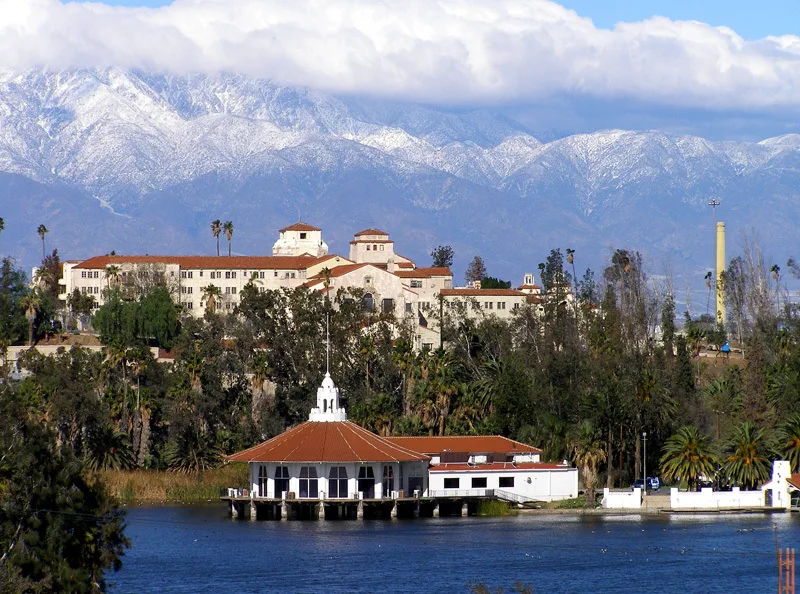
Lake Norconian Club is a resort district in Norco, California, centered on a large Spanish Colonial Revival hotel and club built into a hillside above a 58-acre man-made lake. The 204,000-square-foot main building has stucco walls, clay tile roofs and Churrigueresque cast stone ornament, and its massing remains basically intact. Inside, the dining hall, the gym that began as a ballroom, the music room and the south indoor pool keep much of their original decoration. The district also includes a tea room and terrace, a casino/pavilion, a boathouse, a stone footbridge, gazebos, a power plant with smokestack, a laundry/garage building with gas station island, and the 1920s maids' quarters. During World War II the Navy took over the grounds and added hospital buildings. The property was later divided between the State of California and the Navy, and security features such as guard towers were added. The ensemble preserves a rare example of a 1920s resort and its landscape setting.
Machine-generated summary. This summary was generated by a language model from the official nomination document and has not been reviewed line by line by an editor. It may contain errors. Check the source document before relying on any detail. Source: nomination document (PDF) · catalog entry. Generated October 2026 (model claude-sonnet-5-5, prompt v1.0-2026-10-29).
| Styles | Late 19th and 20th Century Revivals/Spanish Colonial Revival |
|---|---|
| Areas of significance | Architecture, Exploration/Settlement |
| Acreage | 92 |
| Boundary source | NPS cultural-resource GIS polygon |
| Full listing page | Lake Norconian Club (property record) |
What listing means for this property
This is a historic district. Buildings within its boundary are either contributing (they add to the district's significance) or non-contributing. Owners of contributing income-producing buildings can claim the 20% federal rehabilitation tax credit; homeowners should look at state credits. National Register districts impose no design review by themselves; a local historic district ordinance, if one exists, does (the difference explained).
General information, not legal or tax advice. Rules change; confirm with your State Historic Preservation Office or a qualified adviser.