Kroger-Melrose District

Why it's listed
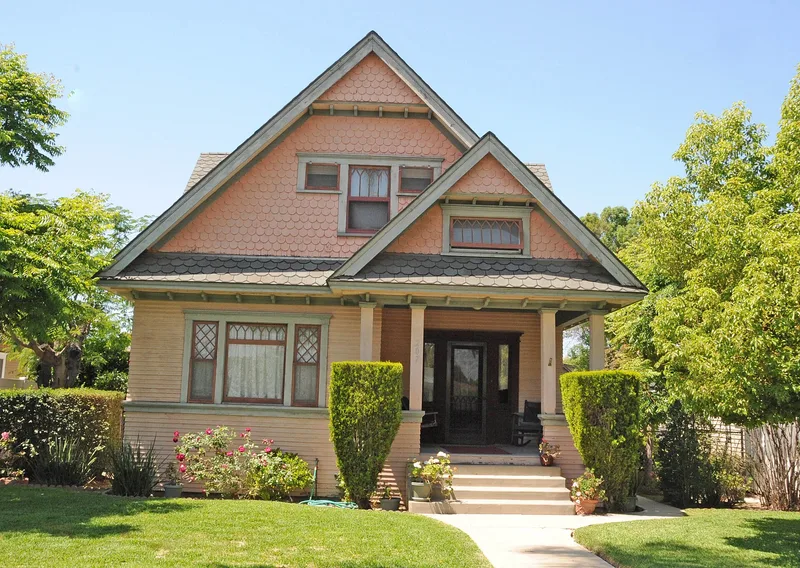
Sixty-seven properties on five streets just south of Lincoln Avenue make up this Anaheim neighborhood, which developed mostly between 1900 and 1915. The tract was subdivided in 1887 on land once held by the Rimpau family, and the first single-family house, a Queen Anne cottage at 115 S. Olive, went up in 1892. The Boyd House of 1898 at 129 S. Olive is the earliest remaining Transitional/Colonial Revival house in the city. The district contains Anaheim's largest concentration of that style, followed by Craftsman Bungalows, with California Bungalows and two Spanish Colonial buildings added as infill in the 1920s. Houses typically have narrow clapboard siding, classical porch columns, bellcast hip roofs and fine woodwork. The streets reflect the modest, practical tastes of a German-influenced community, where even prominent businessmen built unpretentious homes. Fifty-seven buildings contribute to the district. Its position within a redevelopment project area leaves part of it threatened with demolition, while some homes have been restored.
Machine-generated summary. This summary was generated by a language model from the official nomination document and has not been reviewed line by line by an editor. It may contain errors. Check the source document before relying on any detail. Source: nomination document (PDF) · catalog entry. Generated October 2026 (model claude-sonnet-5-5, prompt v1.0-2026-10-29).
| Styles | Transitional/Colonial Revival, Craftsman Bungalow, Queen Anne cottage, California Bungalow |
|---|---|
| Areas of significance | Exploration/Settlement, Architecture |
| Acreage | 14 |
| Boundary source | NPS cultural-resource GIS polygon |
| Full listing page | Kroger-Melrose District (property record) |
What listing means for this property
This is a historic district. Buildings within its boundary are either contributing (they add to the district's significance) or non-contributing. Owners of contributing income-producing buildings can claim the 20% federal rehabilitation tax credit; homeowners should look at state credits. National Register districts impose no design review by themselves; a local historic district ordinance, if one exists, does (the difference explained).
General information, not legal or tax advice. Rules change; confirm with your State Historic Preservation Office or a qualified adviser.