Jackson Square Historic District
Why it's listed
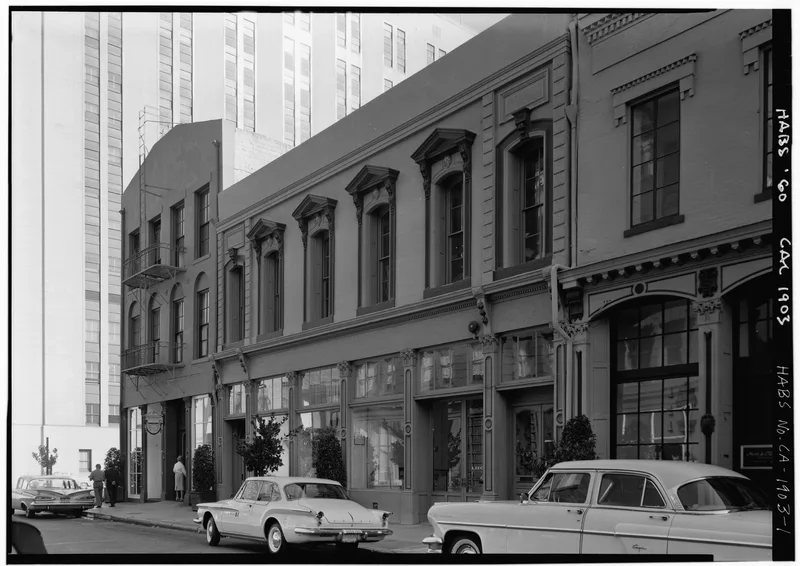
Jackson Square is a compact district of roughly one hundred commercial buildings in downtown San Francisco, covering about fourteen acres near the former waterfront. Built mostly between the 1850s and about 1911, its brick masonry buildings are typically two or three stories, under 40 feet, with tall ground floors, deep-set windows, arches, heavy cornices and cast-iron details in Italianate and classical styles. Part of the area sits on fill that includes abandoned ships. These are the earliest surviving structures from the Gold Rush city, and they came through the fires of the 1850s and the earthquakes between 1868 and 1906 because of sound construction. Merchants, bankers, newspapers, consulates, wineries and chocolate makers once worked here, and figures such as William Tecumseh Sherman and Domingo Ghirardelli held businesses or property in the area. Narrow streets, alleys and a pedestrian scale give it a distinct identity beside the modern financial district, and it continues to serve as a working commercial area.
Machine-generated summary. This summary was generated by a language model from the official nomination document and has not been reviewed line by line by an editor. It may contain errors. Check the source document before relying on any detail. Source: nomination document (PDF) · catalog entry. Generated October 2026 (model claude-sonnet-5-5, prompt v1.0-2026-10-29).
| Period of significance | 1850-1911 |
|---|---|
| Styles | Italianate and classical masonry commercial buildings |
| Areas of significance | Commerce, Architecture |
| Acreage | 14.2 |
| Boundary source | NPS cultural-resource GIS polygon |
| Full listing page | Jackson Square Historic District (property record) |
What listing means for this property
This is a historic district. Buildings within its boundary are either contributing (they add to the district's significance) or non-contributing. Owners of contributing income-producing buildings can claim the 20% federal rehabilitation tax credit; homeowners should look at state credits. National Register districts impose no design review by themselves; a local historic district ordinance, if one exists, does (the difference explained).
General information, not legal or tax advice. Rules change; confirm with your State Historic Preservation Office or a qualified adviser.