Hollywood Boulevard Commercial and Entertainment District

Why it's listed
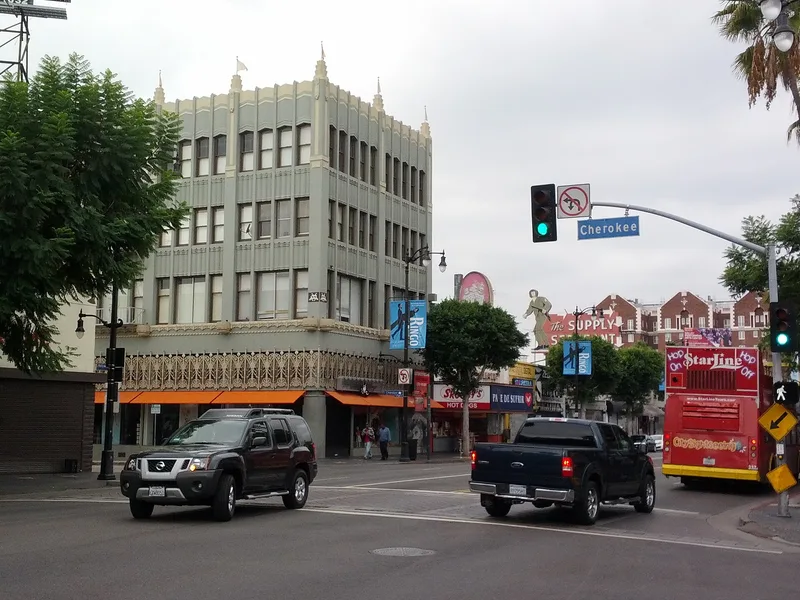
Hollywood Boulevard between about 6200 and 7000 Hollywood Blvd. forms a 12-block commercial core in Los Angeles, with 102 buildings, most built between 1915 and 1939. High-rise office and bank buildings, several at the 12-story height limit, mark the main intersections and are flanked by one- and two-story shops. Styles include Classical Revival, Spanish Colonial Revival and Art Deco, along with a few French Chateauesque and Streamline Moderne examples. Landmarks include the Pantages Theater, the Equitable Building, the Guaranty Building, the Warner Theater and the Palace Theater. Neon signs, terrazzo entryways and the Walk of Fame add to the street's character. During the 1920s and 1930s the boulevard changed from a residential street into the shopping, financial and entertainment center of the film capital. The district was listed because it shows that Golden Era in a compact, cohesive streetscape, even though many ground-floor storefronts have been altered.
Machine-generated summary. This summary was generated by a language model from the official nomination document and has not been reviewed line by line by an editor. It may contain errors. Check the source document before relying on any detail. Source: nomination document (PDF) · catalog entry. Generated October 2026 (model claude-sonnet-5-5, prompt v1.0-2026-10-29).
| Period of significance | 1915-39 |
|---|---|
| Styles | Classical Revival, Spanish Colonial Revival, Art Deco, with some French Chateauesque and Streamline Moderne |
| Areas of significance | Commerce, Entertainment/Recreation, Architecture |
| Acreage | 56 |
| Boundary source | NPS cultural-resource GIS polygon |
| Full listing page | Hollywood Boulevard Commercial and Entertainment District (property record) |
What listing means for this property
This is a historic district. Buildings within its boundary are either contributing (they add to the district's significance) or non-contributing. Owners of contributing income-producing buildings can claim the 20% federal rehabilitation tax credit; homeowners should look at state credits. National Register districts impose no design review by themselves; a local historic district ordinance, if one exists, does (the difference explained).
General information, not legal or tax advice. Rules change; confirm with your State Historic Preservation Office or a qualified adviser.