Hofer Ranch

The National Park Service has not published a boundary polygon for this district; the map shows the listed properties inside it and the district's reference point.
Why it's listed
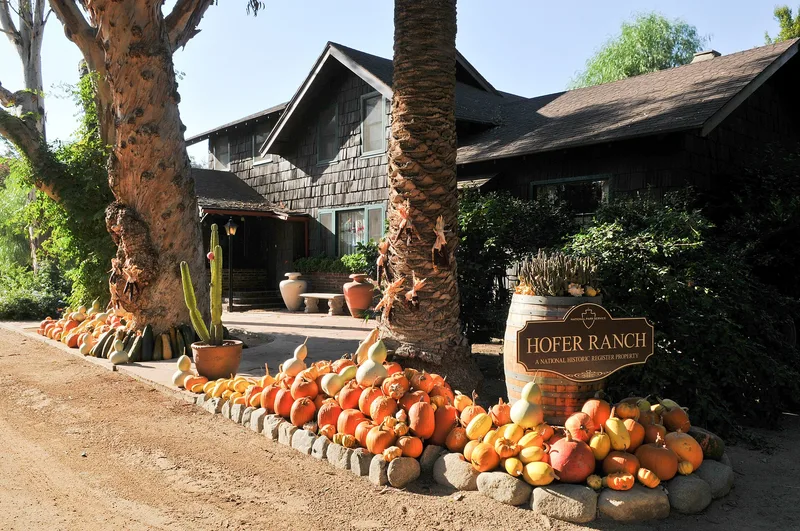
Hofer Ranch is a five-acre cluster of farm buildings and structures on South Turner Avenue in Ontario, California, now surrounded by industrial parks built on former farmland and vineyards. Sanford Ballou bought the first ten acres in 1882, and around 1898 he and his son Benton began building the ranch, starting with the barn. Benton proved that grapes, peaches and apricots could be dry-farmed in the semi-arid area, and by 1915 the ranch covered about 900 acres, mostly vineyards. His nephew Paul B. Hofer, Sr., became foreman in 1919 and gradually bought the property. The buildings, mostly redwood in California ranch vernacular style, include a rambling two-story Craftsman ranch house that grew from an 1870s school building, a rare two-story bunkhouse, a tripod windmill, a water tower and a Quonset hut. Original furnishings and equipment remain. The ranch is considered the best example of a working ranch in Ontario and is significant for its agricultural history and architecture.
Machine-generated summary. This summary was generated by a language model from the official nomination document and has not been reviewed line by line by an editor. It may contain errors. Check the source document before relying on any detail. Source: nomination document (PDF) · catalog entry. Generated October 2026 (model claude-sonnet-5-5, prompt v1.0-2026-10-29).
| Period of significance | 1898-1946 |
|---|---|
| Styles | Other: Ranch Buildings (California ranch vernacular, with a Craftsman main house) |
| Areas of significance | Agriculture, Architecture |
| Acreage | 5.1 |
| Boundary source | not published |
| Full listing page | Hofer Ranch (property record) |
What listing means for this property
This is a historic district. Buildings within its boundary are either contributing (they add to the district's significance) or non-contributing. Owners of contributing income-producing buildings can claim the 20% federal rehabilitation tax credit; homeowners should look at state credits. National Register districts impose no design review by themselves; a local historic district ordinance, if one exists, does (the difference explained).
General information, not legal or tax advice. Rules change; confirm with your State Historic Preservation Office or a qualified adviser.