Grey, Zane, Estate

The National Park Service has not published a boundary polygon for this district; the map shows the listed properties inside it and the district's reference point.
Why it's listed
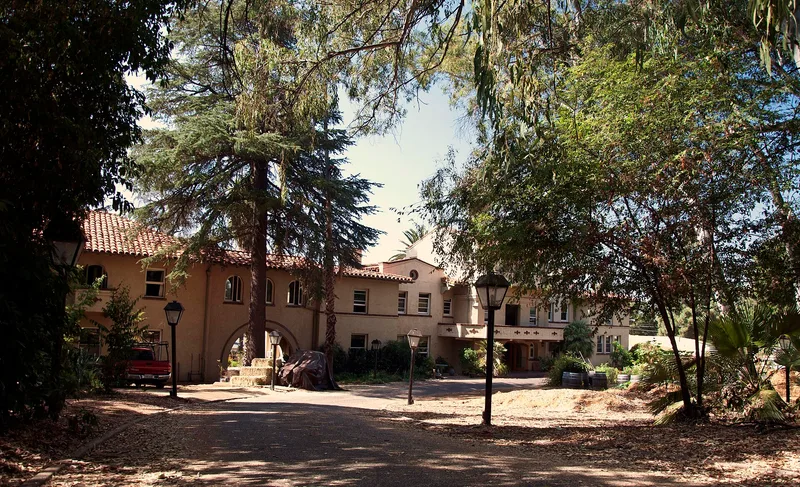
This three-story house at the foot of the Altadena foothills was built in 1907 and later became the home of Western novelist Zane Grey. It is designed in the Mission/Spanish Colonial variant of Mediterranean Revival style, with reinforced concrete and stucco walls, arched wood windows and doors, balconies, and a terra-cotta tile roof added over the original steel. After buying the property in 1920, Grey added a third-floor writing studio, and an east wing followed in 1928. Interiors blend Arts and Crafts features, including Grueby and Batchelder tile, with a library painted freehand with Kachina designs by his wife's cousin, Lillian Wilhelm Smith, in 1923. Grey lived here until his death in 1939 and wrote nearly forty novels during that time. The parcel is the remnant of an original five-acre estate, the rest of which was sold and subdivided in 1967. The house is still a private residence and retains much original fabric.
Machine-generated summary. This summary was generated by a language model from the official nomination document and has not been reviewed line by line by an editor. It may contain errors. Check the source document before relying on any detail. Source: nomination document (PDF) · catalog entry. Generated October 2026 (model claude-sonnet-5-5, prompt v1.0-2026-10-29).
| Period of significance | 1920-1939 |
|---|---|
| Styles | Mission/Spanish Colonial Revival |
| Areas of significance | Literature |
| Acreage | 1.2 |
| Boundary source | not published |
| Full listing page | Grey, Zane, Estate (property record) |
What listing means for this property
This is a historic district. Buildings within its boundary are either contributing (they add to the district's significance) or non-contributing. Owners of contributing income-producing buildings can claim the 20% federal rehabilitation tax credit; homeowners should look at state credits. National Register districts impose no design review by themselves; a local historic district ordinance, if one exists, does (the difference explained).
General information, not legal or tax advice. Rules change; confirm with your State Historic Preservation Office or a qualified adviser.